Showing posts with label New York. Show all posts

Friday, July 10, 2026

Cycling New York's Capital Region: Cohoes Falls, the Niagara Falls of Eastern New York

Cohoes Falls


The title isn't hyperbole. Cohoes Falls, the much, much, much lesser known huge waterfall of New York State is the second largest waterfall in the United States. Second largest, is that a typo? No.


So why don't people travel from all over the world to visit it? And why haven't you heard of it?  Unfortunately due to diversions for power plant and the canal, the falls doesn't run all year at the consisten volume that Niagara tends to. When it's flowing the 1000ft wide by 90ft high waterfall dumps a ridiculous amount of water volume over the precipous (at peak it comes within a mere 10% of Niagara Falls peak), but there are times throughout the year it's just a trickle. 


Unfortunately (actually, quite fortunately for those of us who live here), the Capital Region is terrible at marketing itself. It's also somewhat apathetic. With a location that puts it within 4 hours (a mere half day drive) of 90% of anything worth visiting in the Northeast US and some of Canada, it's a great place to live and I think perhaps some of that convenience makes the folks in the area not care too much.


Monday, June 8, 2026

Stewart's Shops an Upstate New York (and now Vermont) Staple of Bikepacking Resupply


Final resupply at Stewart's in Arlington, Vermont


Stewart's Shops, an upstate NY staple of bikepacking resupply that has expanded into Vermont. Final resupply of the trip. 22 miles and 2500ft gain ahead of us in the rain.

I ate a terrible hamburger (I crave protein and sodium on these trips) and downed a coffee for the caffeine. Bought 2 bananas, a 20oz root beer for the sugar which I dumped into a 20oz water bottle, a snickers bar, a Reese Peanut butter protein bar and gallon of water.

I refilled my 20oz electrolyte/carb bottle with a Mango Chili LMNT and dumped my last 4oz of maple syrup into it. I also still had two gluten free honey stinger cookies.

Besides maple syrup and hamburgers I never eat any of this crap in real life (not even bananas which are filled with sugar, unless you eat them green, in which case they are filled with healthy resistant starch).

I ate all but one of the honey stingers and 6oz of root beer on the final 22 miles.

Bikepacking isn't the time to lose weight or count calories or eat super clean (though you can meet your nutrition without going entirely off the tails). Any single day ride you can limp home bonked out, but multi-day trips the damage is cumulative for nutrition and hydration. Eating and drinking constantly is best to avoid starting out with zero energy. A lesson I learned riding the Moose River Plains loop in 2022 where I totally bonked out midway into day two on no sleep and horrendous fueling.

Maple syrup isn't cheap, but unlike expensive gels (or homemade simple syrups) my GI tract seems to have unlimited capacity to consume the stuff. It's possible I'm part Elf. I drank 22oz of it over 4 days (2 water bottles had 3oz each to start and I brought 16oz in flexible flask). Adding it to my electrolytes should speed up water absorption and help top off my glycogen stores.

I was tired at times but never felt under fueled. Oh, and I lost about 3lbs of actual weight (my fleece cycling jacket was noticeably roommier to end the trip and that isn't water weight). No matter how much you eat, you'll end up in a deficit over multiple days so don't stress.


Stewart's Shops, Poultney, Vermont


Sunday, June 7, 2026

Rounadabout Manchester Route- Gravel bikepacking in Vermont and Eastern New York


Just a quick, this is what we did, it was fun, and go have at it post. 

The road to IP Road
I call it the Roundabout Manchester. I've had it on paper (or pixels) for about 4 years and it was pretty awesome to finally do it. I only live about 40 miles (an hour) from the start so it was sort of inexcusable to not do it. However, it wasn't a dog friendly route (even if I had a trailer those Cat 2 climbs would absolutely suck). It's a gravel bike tour with some abandoned Vermont Class 4 roads. 

Lots of good camping, resupply at good intervals. You can do this as an epic day ride, challenging overnight, or a 3 or 4 day trip. We did 4 not so equal days (day 1 only had 22mi and 550ft of 11000ft elevation total) but it worked out great. At camp almost every day with plenty of light. 


D&H in Granville, NY
Camping in Green Mountain National Forest


Thursday, April 30, 2026

Exploring the Adirondacks by Bicycle - Bikepacking Wilcox Lake Wild Forest


With ~2 million acres of public land open to bicycles within and adjoining the Adirondack Forest Preserve, the Adirondacks are a blank canvas for exploration by bicycle. Just don't expect to ride your bike the whole time while finding which trails are rideable and which are not.

Wednesday, March 11, 2026

Cycling to the top of Cohoes Falls: The Waterford Flight of Locks

Waterford Flight of Locks
At the top of the Waterford Flight of Locks


Those in the Capital Region of New York might not pay much attention to the Erie or Champlain Canals; afterall, that which surrounds us is often least visible.

From the gatehouse of the first lock on the Waterford Flight of Locks


Waterford, New York is the crossroads of the Champlain and Erie Canals. It is also home to the worlds highest elevation gaining series of successive locks. There are single locks both on the Erie Canal and around the world that gain more elevation in a single lock than any of the Waterford Flight of Locks, but none gain the 169ft the Waterford Flight gains in about 1.5 miles to bring boats above Cohoes Falls, which is the Capital Regions version of Niagara Falls. A true engineering feat.


I've lived at the cross roads of the Erie and Champlain Canal for a good chunk of my adult life and like most people didn't pay much attention to it. When the Empire State Trail, which follows greenways and bike paths up the Hudson River from NYC to Albany, and then to Buffalo (west on the Erie Canal) and Canada (north on the Champlain Canal) was unveiled I also dismissed that. The main reason was I hate multi-use paths. Kids, pets, roller bladers, joggers and walkers all share these paths and as a cyclist you are non protected and most at risk for getting injured. A walker can step out of the way at the last second, but if I cyclist makes a last second, last ditch move, it could end with them planting face on the pavement.

Running from NYC to Canada, 750-mile Empire State Trail is now complete
The Empire State Trail which is formed by the Hudson River Greeway, the Erie Canal and the Champlain Canal


Over the last 6 years I've gotten deeper and deeper back into recreational cycling and along the way, I've become more and more road averse. Drivers are just very distracted today, even those who aren't on their phones, and cars are bigger, cycling infrastructure on road ways is still largely just a 3ft shoulder in most places, and less in plenty. As a result I've gravitated to gravel, trails, and bike paths.


The rebirth of the Erie Canal as a mostly protected bike path for a good chunk of it's 500 (NYC to Buffalo) miles and it's proximity to Amtrak service out of the Capital Region (there are 3 stations within 20 miles of the Erie and Champlain Canal intersecton) made it very appealing to me over time. I've both ridden the Empire State Trail \locally in the Capital Region and in sections via Amtrak.

Spring on the Erie Canal Trail - New York
Smelling the flowers on the Erie Canal Trail outside of Weedsport, NY

While not a wilderness experience by any means, there are plenty of spots on the EST that you will find yourself surrounded by nature.  


Monday, February 9, 2026

Bikepacking: 1991 Trek Multi-track 7900 loaded on the Erie Canal Trail (Empire State Trail)

1991 Trek Multitrack 7900 on the Erie Canal
Trek 7900 fully rigged and loaded on day 6 of the Heart of the Finger Lakes Route which used the Erie Canal, Cayuga-Seneca Canal and looper around the Finger Lakesfrom Syracuse Amtrak Station


These old Treks were some of the first mass produced gravel type bikes. There were others but none were so readily available. Of course back then gravel bikes weren't a genre so these were sold as hybrids with flat bars. 


It turns out, as long as you don't require disc brakes (and trust me, marketing is a powerful thing but a set of V-brakes with salmon Koolstops are going to stop your bike at least as well as most mechanical disc) these are ideal mixed surface touring bikes/gravel bikes. 


The higher end models like the 7900 came with premium level MTB components. Deore, LX, XT depending on year and a 700c MTB rim with MTB hubs and spacing. Rack mounts, fender mounts. 


Drop bar conversion on a 6/7/8/9 speed just meant a pull adapter for the front derailleur or even easier a bar end friction shifter (I've done both on the two I own). 


The gearing on this is far superior to any modern 1x or even 2x drive train. It's a little less than the 670% of my 7900 but still around 600% with nice tight spacing, a true high gear and a very good low gear (24x34). 


As seen, the bike is outfitted with a Soma Rakku 2 rear rack with Topeak Versa Cages and dry bags (this wasn't an aesthetic choice or a function choice, we didn't finish the second set of panniers), an aliexpress Pizza Rack knock off on front with some creative but very secure attachment, homemade (home modified) military sustainment pouch micro panniers that cost $2.50 each and an hour of hour time per set to modify. The feed bag is a Moosetreks which I scored 5 of for $65 total (shipped). If you know the outrageous cost of bikepacking labeled equuipment you know these climbing chalk bags are not worth $60 each. The Moosetreks feed bag is as nice as any other feed bag on the market and even at it's $27 retail price is still a steal. 


I added a downtube bottle mount for extra capacity. I know a lot of folks dislike the down tube bottle mount but a pro tip, don't drink directly out of it. You just pour the liquid into one of your other bottles.  


The rear derailleur is a takeoff from a newer (90s model) bike. It's XT 8spd vs Deore 7spd. It's running a 9spd cassette. We used microshift R9 brake shift levers, but ended up going with a Sunrace 3x front friction shifter instead of a pull adapter on the front brake shifter. Sunrace bought Sturmey Archer years ago and makes some high quality parts. It's not an AliExpress quality company.  While my preference is cantilever vs v-brakes, I opted for the lower maintenance, higher max stopping power of the XT V-brakes we had from a takeoff mountain bike in the parts bin. Cantis offer better feel and if adjusted properly will stop with plenty of power, but they also require fairly constant maintenance. 


The rear wheel I had to go with a new version. I went with a Weinman Zac 19 in my preferred 36 spoke configuration. There was nothing wrong with the original rim, but it was dished for a 7speed cassette and once again, I didn't have time to redish or bring it somewhere to be redished. 


As shown the bike is outfitted with 38mm Challenge Gravel Grinder tires on 18 and 19mm rims. I love these tires for the gravel I typically ride, and they were great on this trip, but they tend to wear fairly fast on pavement heavy riding. I feel like 35mm is the ideal tire width for unloaded road riding. 38mm might be a little narrow but the riders on this bike won't be heavier than 130lbs and fully loaded this bike is about 160lbs (bike, gear, rider). The multitracks vary in max tire width but 40-45mm is typical (sometimes 50mm possible up front). When this bike needs new tires I will upgrade to 40-45mm for better gravel and rough road performance and comfort. 


20210823_182839_HDR-01
Trek 7900 in original form as purchased for $100

Overall, this is very solid frame up build using a mix of original parts and some parts bin or selected new parts where necessary. Every bearing and part was stripped and cleaned. This is essentially a new bike! 

20250511_195114
Initial test ride before final adjustments and bar taping. All the racks are visible here and the down tube bottle mount. I got creative with the front rack mount but it's very secure and I wouldn't hesitate to run 20lbs on it.


Wednesday, February 23, 2011

Colvin Surveys Cascade and Porter

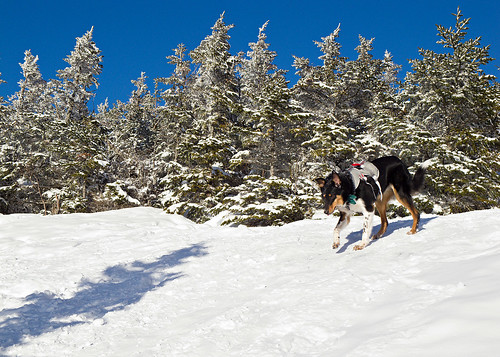
Colvin, wearing a Ruff Wear Doubleback harness, descending Cascade Mountain
Wow, it didn’t occur to me till today that Colvin Harrison had never summited a 46-R. Now don’t think he’s been neglected, it’s not like he hasn’t been up two of the highest peaks in New Hampshire and a (sub) summit of Vermont’s highest peak in the first 9 months he was with us, just none of the Adirondack high peaks from whom his namesake surveyed the Adirondacks over 130 years ago.

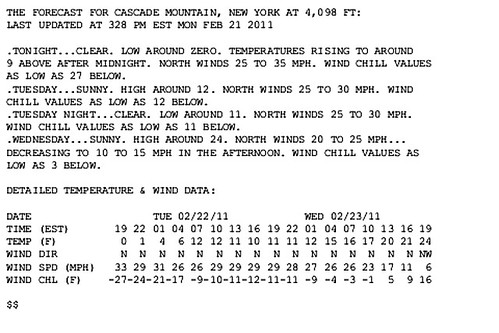
So we picked a day when the wind chills were hovering in the -27F (-32C) range, and the ambient temps at or below 0 on the summit for Colvin to summit his first two Adirondack high peaks! Despite the cold, it was actually a beautiful sunny day with perfect snow conditions.

This forecast data is from an experimental NWS weather forecaster out of Burlington, VT. Unfortunately I didn't get a screen shot before we started hiking. Still, winds were forecast in the 30s mph all day, and it actually was trending warmer as the evening progressed. Conditions at 5pm were at least as bad as 7pm.
 
If you have occasionally read this blog, you know I despise the Adirondack High Peaks Wilderness with a passion. That sounds bloody awful, perhaps I should explain (again). I hate the crowds, rules and fees of the Adirondack High Peaks Wilderness, which just happens to be home of the bulk of the high peaks. While I summited several ADK high peaks in the weeks preceding and subsequent to Colvin Harrison’s arrival in New York, he just wasn’t trail ready till late March of 2010. 

Unfortunately, because I was k9less during that time, I was able to use different access points than normal for all the high peaks I summited. The peaks that were in the HPW I reached via the Adirondack Mountain Reserve which is privately owned but accessible to humans (no dogs) via easements. This approach, while not a solitary endeavor, is usually less used than the other access points. 

Then the spring came, and mud season with it. We had planned for him to hike the Colvin Range last spring, but it got pushed off by bad weather, and eventually by paddling season that is a necessary escape from the summer heat and humidity.

So oddly, it was 53 weeks before Colvin reached the summit of his first Adirondack high peak. Originally the Upper and Lower Wolfjaws were planned for various reasons, including solitude and the irony of a dogs first 46-R being the “wolfjaws”, but the closer parking area being unploughed and not wanting to walk in the road (almost no shoulder during the winter with the snow banks) while trucks and cars whizzed by at 55mph, I aborted the Wolfjaws via Deer Brook. And damn the cliche, decided to climb Cascade and Porter, two of the Adirondacks easiest high peaks and often an aspiring 46-Rs first ticks on a checklist. 


Aim ascending Cascade (Jan 2005)
Cascade is a mere 2.4 miles from the trail head which begins at a lofty 2000ft. Being one of the smallest of the 46-R’s it’s a mere 2000ft ascent. In terms of steepness, it’s pretty mellow. Even the steeper sections aren’t all that steep.  And throwing in Porter adds another 1.4 miles round trip, but a mere 460ft elevation gain/loss over that 1.4 miles. Precisely why Cascade is often the very first high peak people climb.

We arrived at the Cascade/Pitchoff trail head to find it packed. Cascade and Giant Mountain are probably the two most hiked high peaks in the Adirondacks, and on any weekend day you will find both trail heads packed with cars. So I drove towards Lake Placid and stopped at the Cascade ski shop, then we drove up Mountain Road to check out the conditions on the Jack Rabbit trail. Plenty of good quality snow despite the recent heat wave. When we got back to Cascade there were still too many people on the trail, so we took a little nap in the warm sun (yes, direct sun in a car is warm even when it’s around zero outside). 2 hours later the parking areas were thinning out, and we were off. 

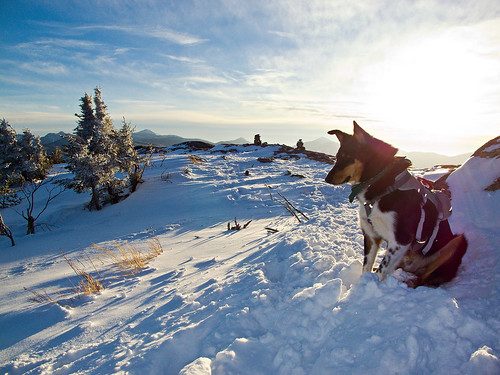
Colvin at a wind break  just below the summit.

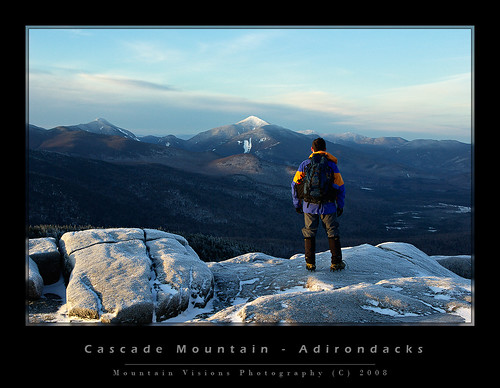
Obviously I was accepting I was going to be sharing the trail with people, unlike the desolate Wolfjaws via Route 73. However, while I was ok with making a deal with the Devil to get a good hike in on a pristine day. I didn’t want to be ascending during an exodus of hikers. Killing a few hours so I could catch the late afternoon light from the summits and only see a few people on the trail was easy enough. If timed just right I wouldn’t even need to use my headlamp. Very rarely are conditions this clear in the Adirondacks, and Cascade is a mountain that lives up to it’s record summit attempts.  You can see 30 of 46 high peaks from it’s completely unbstructed summit and the best time to do so is in the early morning or late afternoon when the mountains really stand out with some depth.
 
Aside from that, I’ve always hiked Cascade either before sunrise or on a weekday. So despite the throngs of hikers that ascend it during peak days, I’ve pretty much always had the upper mountain to myself. Yep, I’ve only seen 2 other people on the summit of Cascade ever


The photographer taking in the early morning light, alone on one of the Adirondacks most hiked peaks (January 2008)

If I had any doubts about the conditions on the summit, I didn’t need verbal verification. The last group of hikers we saw descending were dressed like they were on a winter ascent of Denali, one of the coldest major summits on earth. 

Colvin below the summit

Colvin and I were on the summit of Cascade in about 2 hours which wasn’t bad considering I had to attempt a field repair of a rivet on my MSR Denali. Messing with bolts, washers and nuts in 0F temps is pretty much futile unless it’s life and death -as I write this, it just occurred to me that in 2003 I had a crampon malfunction on Cascade as well.  Eventually I gave up, I ditched the snowshoes below the summit of Cascade.

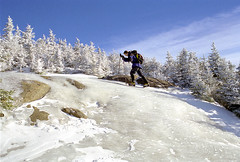
Ascent up the summit slabs (January 2005).

The climb up the summit slabs of Cascade was mostly bare rock with some avoidable ice, only one or two spots would crampons have made things safer, naturally I fell in one of those spots (the safer of the two, and the spot I fully expected to go down) on descent, otherwise bare booted to the summit over the rock, snow and ice without incident.

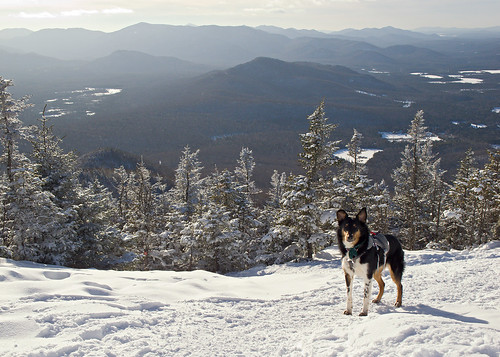
Colvin just feet below the summit as we began our descent.


Caney a few feet ahead of Colvin (January 2008 sunrise) 50mm vs about 105mm, side lit vs. backlit background. Notice the difference in compression and dimension with the telephoto vs the normal lens and the different lighting?

Colvin did great. There was a section I thought he might have problems with, and the wind has never been his favorite force of nature. But he shot up the last .3 of a mile almost effortlessly picking the marked route perfectly unless he saw a better route. I didn’t have to give him an assist or verbal cues up or down. He’s getting much better on the trail and much more confident.

Another cold winter day on Cascade (Jan 2004)
We were both pretty cold when we got back to the Porter intersection, though we both had all our insulating layers in my pack if we needed more heat than movement would provide. I debated not going to Porter, it was already after 5pm, but the trail was well packed and descent would be fast. In the end it was too easy to pass up this BOGO summit. Besides, herding dogs do winter ascents of Cascade as a warm-up before they eat breakfast and tick off a great Range Traverse in the afternoon. Colvin expected more than a measly 4.8 miles, so I put my snowshoes on while Colvin and I snacked and hydrated.

We made quick time to Porter as we tried to warm up. The 1.4 miles round trip took about 30 minutes. We were back at the Cascade intersection by 5:30pm. The 2 mile descent took about 45 minutes sans snowshoes with only a few butt glissades where my bare boots met an icy patch as I jogged down hill. Colvin would see me jogging and sprint ahead full blast, come to a skidding stop in the snow and sprint back up the trail as I continued jogging down. As is typical, he generally hikes/sprints at least 50% more miles than the actual hike requires.

We were back at the car by 6:15p with just enough light to not need the headlamp. 

Total stats for the hike. 2 ADK high peaks, 4600 ft gain/loss over 6.2 miles in 3 hours 30 minutes.  Winds 30mph from the North, 0F ambient, and unlimited visibility. Pretty much a perfect mid winter day!!!  


Wednesday, June 9, 2010

Legislature Successfully Defends Paterson's Assualt On EPF

The following is not without some negative. The legislature did in some ways gut the EPF, but it didn't allow David A. Paterson to milk the EPF to cover his shortcomings as a leader. The legislature prevented him from using the EPF as a rainy day fund for the states day to day expenses, which was his initial goal.

The bottom line was that they cut about $78 million out of the EPF to fund the $11 million it (supposedly) cost to reopen the state parks and campgrounds that were closed.

I'm the first one to admit I'm not super smooth at math, but something isn't right. Basically Paterson held the NY State Parks as hostages while he demanded the funds from the EPF. So what he did was he said, the park system, which saw record visitation last year (and I'll assume near record revenue, or I'll again assume probably broke even in expenses) was too expensive to run, so if the legislature wanted to appease it's constituents it would have to deal the EPF.

See, unlike most of the Forest Preserve or the EPF, people and towns feel the crunch of the park closures instantly. It really hits home. Paterson tossed a grenade into the assembly and senate chambers and waited for someone to dive on it. Of course, there probably isn't one upstanding human being in the legislature, so they did the only thing they could, they tossed the EPF on it to save themselves.

Paterson is gutless, he's potentially a moron, but someone smart is pulling the puppet strings behind this guy. This was a move Joe "Prison Bound" Bruno would have been proud of.

Regardless, it's good to see New York State politics remain as corrupt as when Theodore Roosevelt literally had to break a leg off a chair to defend himself on the floor of the state capitol because he was one of just a few members of our government who would not tolerate the corrupt antics of our law makers.


ALBANY, N.Y. – The Adirondack Council today thanked the leaders of the NYS Senate and Assembly for standing up to a flurry of attacks on the NYS Environmental Protection Fund (EPF) proposed by Gov. David Paterson during this year’s budget negotiations.

Legislators today passed bills agreed to yesterday with Gov. Paterson that would reopen the state parks, historic sites and campgrounds closed by the Governor, while also preserving the funding and traditional spending priorities of the EPF.

While the overall spending levels for the EPF for FY 2010-11 are lower than the organization had hoped, the group praised the two Environmental Conservation committee Chairmen (Sen. Antoine Thompson of Buffalo and Assemblyman Robert Sweeney of Lindenhurst), as well as Senate Conference Leader John Sampson and Assembly Speaker Sheldon Silver, for making numerous improvements to the EPF in light of a $9 billion budget deficit.

“Today’s legislation would preserve the reliable funding source and the integrity of the Environmental Protection Fund, while reopening the state’s parks and campgrounds before the Memorial Day weekend,” said Brian L. Houseal, Executive Director of the Adirondack Council. “It would also allow the state to live up to some of its existing commitments to purchase and protect critical lands and waters that have been identified by the public for their recreational and ecological importance.”

The EPF’s 2010-11 total funding will be $134 million, down significantly from $222 million last year. The open space account for 2010-11 contains $17.6 million, much less than the $60 million from 2009-10, but it also rescinds Governor Paterson’s proposed moratorium on land protection. It is our understanding that the Governor has agreed to spend this money on land protection projects that the Legislature has allocated.

Not included in the EPF’s expenses are $11 million the Governor had proposed for paying state employees and day-to-day expenses at parks and historic sites. Also not included in the EPF’s expenses are $5 million for a portion of the state’s payment of taxes to local governments for state-owned land across the state. Both of those expenses are due to come from the state budget’s General Fund, as they have in past years.

“Legislative leaders recognize that all New Yorkers need clean air, clean water and safe places to play. We also need the tourism revenue that our parks, campgrounds and Forest Preserves and other open spaces provide to our citizens,” Houseal said. “We are grateful that they did so much to improve on the Governor’s plan.”

The EPF was created in 1993 and is funded primarily through a small Real Estate Transfer fee, to fund major environmental expenses. Eligible projects include municipal landfill closure, purchase and construction of recycling facilities and transfer stations; as well as the purchase of new lands and parks for environmental protection, recreation and historic preservation.

The EPF is a capital-projects-only fund, to ensure that its revenues would not be siphoned into paying day-to-day expenses, such as state employee salaries and benefits.

“If state agencies were allowed to pay their employees out of the EPF account, the EPF would be dry in just a few years,” Houseal explained. “We would never fund another capital project out of it. We’d be right back to borrowing for everything. Nobody wants that.”

“Governor Paterson followed the lead of his predecessors and tried to use the EPF to pay for staff and other administrative expenses,” Houseal said. “He wanted to change the very structure of the EPF. We are pleased the Legislature said ‘no.’”

The final agreement on the EPF passed both houses earlier today. The Assembly passed the bill by a vote of 86-47 just before 3 AM early Friday morning. The Senate passed the bill by a vote of 32-27 at 2:30 PM.

The Adirondack Council’s mission is to ensure the ecological integrity and wild character of the Adirondack Park. Founded in 1975, the Council is a privately funded not-for-profit organization with 18,000 members in all 50 United States. The Council carries out its mission through research, education, advocacy and legal action.


Additional comments on the "poisoned pill" compromise:


Land state should buy isn’t all in Ad’ks


To the editor:

In regard to your June 3 editorial ("This year, of all years, NY can't afford land"), it is critically important that Daily Enterprise readers understand that the Environmental Protection Fund preserves sensitive habitat, not just in the Adirondacks but around the state.

While the North County is blessed with abundant nature and open space, such is not the case in more crowded areas like the Hudson Valley and Long Island. For example, in the Long Island Pine Barrens - a sensitive ecosystem that protects clean drinking water for thousands of people - the threat of development is not simply an aesthetic one.

Conservationists have been in discussions with land owners in the Pine Barrens for years, in an effort to convince them not to sell out to another strip mall or subdivision. When Gov. Paterson threatened to suspend all habitat purchases earlier this year, the threat of defunding the open space line of the EPF nearly derailed negotiations and put the public's well being at risk.

Your criticism about very modest open space funding would be better directed at the cynical political process that gutted the Environmental Protection Fund in its entirety. By hiding a massive EPF cut in the bill that reopened state parks, Albany legislators slipped in a "poison pill" that truly shortchanged New York's treasured natural heritage.

We encourage Daily Enterprise readers who hunt, fish and otherwise enjoy the area's natural splendors to find out how their Albany representatives voted on environmental funding this year - and keep that information in mind when they go to vote next fall.Marcia Bystryn, president

New York League of Conservation Voters

via: Adirondack Daily Enterprise

Thursday, March 25, 2010

It's Just Like A Facebook Update, Only It Matters!

In reference to my last post on the environmental protection fund, here is how you contact your assemblyman in New York via email today and beyond. Below this I've attached a full list of assembly members with district and email addresses. If you don't know who your assemblyman is just click this -->link and enter your zip code to find out.

It's sort of like a Facebook status update (you know the 60 or so you post a day) or voting on American Idol, only it can actually make a difference.

It's really pretty simple:

1) Figure out your district, then scroll down to it, and click the email link of the member of that district.

2) Type a few words, to the effect of "Dear Assemblyman XXXXX, I would like to remind you that the New York State EPF is important to all New Yorker's and that we would like it's funding maintained etc etc etc... It doesn't have to be eloquent, spelled perfectly, or a masterpiece of American prose, just type words that sound something like what I wrote above without the "etc" or heck, leave 'em in if you want.

3) Hit the send button and feel good that you are probably less apathetic than the guy/gal next to you.

4) Congrats, you are a real live stars and stripes waving American whom did exactly what our founding fathers had in mind over 225 years ago when they created this representative democracy. Even Sarah Palin would "probably" consider you a real American! Pop open a well deserved cold one for all your hard work, sit back with a flag draped over your shoulders, and hum the Star Spangled banner!

Oh, and of course post a status update to Facebook and Twitter while you are at it!


Assembly Member E-mail Addresses

*Assembly Member
*E-mail address
*District

Abbate, Jr., Peter J.
AbbateP@assembly.state.ny.us
49th
Alessi, Marc S.
AlessiM@assembly.state.ny.us
1st
Alfano, Tom
AlfanoT@assembly.state.ny.us
21st
Amedore, George
AmedoreG@assembly.state.ny.us
105th
Arroyo, Carmen E.
ArroyoC@assembly.state.ny.us
84th
Assembly District Thirty Nine
39th
Aubry, Jeffrion L.
AubryJ@assembly.state.ny.us
35th
Bacalles, Jim
BacallesJ@assembly.state.ny.us
136th
Ball, Greg
BallG@assembly.state.ny.us
99th
Barclay, William A.
BarclaW@assembly.state.ny.us
124th
Barra, Bob
BarraR@assembly.state.ny.us
14th
Barron, Inez D.
BarronI@assembly.state.ny.us
40th
Benedetto, Michael
BenedeM@assembly.state.ny.us
82nd
Benjamin, Michael
BenjamM@assembly.state.ny.us
79th
Bing, Jonathan L.
BingJ@assembly.state.ny.us
73rd
Boyland, Jr., William F.
BoylandW@assembly.state.ny.us
55th
Boyle, Philip
BoyleP@assembly.state.ny.us
8th
Brennan, James F.
BrennaJ@assembly.state.ny.us
44th
Brodsky, Richard L.
BrodskR@assembly.state.ny.us
92nd
Brook-Krasny, Alec
BrookKrasnyA@assembly.state.ny.us
46th
Burling, Daniel J.
147th
Butler, Marc W.
ButlerM@assembly.state.ny.us
117th
Cahill, Kevin A.
CahillK@assembly.state.ny.us
101st
Calhoun, Nancy
CalhouN@assembly.state.ny.us
96th
Camara, Karim
CamaraK@assembly.state.ny.us
43rd
Canestrari, Ron
CanestR@assembly.state.ny.us
106th
Carrozza, Ann-Margaret
CarrozzaA@assembly.state.ny.us
26th
Castelli, Robert J.
CastelliR@assembly.state.ny.us
89th
Castro, Nelson L.
Castronl@assembly.state.ny.us
86th
Christensen, Joan K.
ChristensenJ@assembly.state.ny.us
119th
Clark, Barbara M.
ClarkB@assembly.state.ny.us
33rd
Colton, William
ColtonW@assembly.state.ny.us
47th
Conte, James D.
ConteJ@assembly.state.ny.us
10th
Cook, Vivian E.
CookV@assembly.state.ny.us
32nd
Corwin, Jane L.
CorwinJ@assembly.state.ny.us
142nd
Crespo, Marcos A.
CrespoM@assembly.state.ny.us
85th
Crouch, Clifford W.
CrouchC@assembly.state.ny.us
107th
Cusick, Michael
CusickM@assembly.state.ny.us
63rd
Cymbrowitz, Steven
CymbroS@assembly.state.ny.us
45th
DelMonte, Francine
DelMonF@assembly.state.ny.us
138th
DenDekker, Michael G.
DenDekkerM@assembly.state.ny.us
34th
Destito, RoAnn M.
DestitR@assembly.state.ny.us
116th
Dinowitz, Jeffrey
DinowiJ@assembly.state.ny.us
81st
Duprey, Janet L.
DupreyJ@assembly.state.ny.us
114th
Englebright, Steve
EngleS@assembly.state.ny.us
4th
Errigo, Joseph A.
ErrigoJ@assembly.state.ny.us
130th
Espaillat, Adriano
EspailA@assembly.state.ny.us
72nd
Farrell, Jr., Herman D.
FarrelH@assembly.state.ny.us
71st
Fields, Ginny
FieldsG@assembly.state.ny.us
5th
Finch, Gary D.
FinchG@assembly.state.ny.us
123rd
Fitzpatrick, Michael J.
FitzpatrickM@assembly.state.ny.us
7th
Gabryszak, Dennis H.
GabryszakD@assembly.state.ny.us
143rd
Galef, Sandy
GalefS@assembly.state.ny.us
90th
Gantt, David F.
GanttD@assembly.state.ny.us
133rd
Gianaris, Michael N.
GianarM@assembly.state.ny.us
36th
Gibson, Vanessa L.
GibsonV@assembly.state.ny.us
77th
Giglio, Joe
GiglioJ@assembly.state.ny.us
149th
Glick, Deborah J.
GlickD@assembly.state.ny.us
66th
Gordon, Tim
GordonT@assembly.state.ny.us
108th
Gottfried, Richard N.
GottfriedR@assembly.state.ny.us
75th
Gunther, Aileen M.
GuntheA@assembly.state.ny.us
98th
Hawley, Stephen
HawleyS@assembly.state.ny.us
139th
Hayes, Jim
HayesJ@assembly.state.ny.us
148th
Heastie, Carl E.
HeastieC@assembly.state.ny.us
83rd
Hevesi, Andrew
HevesiA@assembly.state.ny.us
28th
Hikind, Dov
HikindD@assembly.state.ny.us
48th
Hooper, Earlene
18th
Hoyt, Sam
HoytS@assembly.state.ny.us
144th
Hyer-Spencer, Janele
HyerSpencerD@assembly.state.ny.us
60th
Jacobs, Rhoda
JacobsR@assembly.state.ny.us
42nd
Jaffee, Ellen
JaffeeE@assembly.state.ny.us
95th
Jeffries, Hakeem
JeffriesH@assembly.state.ny.us
57th
John, Susan V.
JohnS@assembly.state.ny.us
131st
Jordan, Tony
JordanJ@assembly.state.ny.us
112th
Kavanagh, Brian
KavanaghB@assembly.state.ny.us
74th
Kellner, Micah
KellnerM@assembly.state.ny.us
65th
Kolb, Brian M.
KolbB@assembly.state.ny.us
129th
Koon, David
KoonD@assembly.state.ny.us
135th
Lancman, Rory I.
LancmanR@assembly.state.ny.us
25th
Latimer, George S.
LatimeG@assembly.state.ny.us
91st
Lavine, Charles D.
LavineC@assembly.state.ny.us
13th
Lentol, Joseph R.
LentolJ@assembly.state.ny.us
50th
Lifton, Barbara
LiftonB@assembly.state.ny.us
125th
Lopez, Peter D.
LopezP@assembly.state.ny.us
127th
Lopez, Vito J.
LopezV@assembly.state.ny.us
53rd
Lupardo, Donna A.
LupardoD@assembly.state.ny.us
126th
Magee, William
MageeW@assembly.state.ny.us
111th
Magnarelli, William B.
MagnarW@assembly.state.ny.us
120th
Maisel, Alan
MaiselA@assembly.state.ny.us
59th
Markey, Margaret M.
MarkeyM@assembly.state.ny.us
30th
Mayersohn, Nettie
MayersN@assembly.state.ny.us
27th
McDonough, David G.
McDonoD@assembly.state.ny.us
19th
McEneny, John J.
McEnenJ@assembly.state.ny.us
104th
McKevitt, Tom
MckeviT@assembly.state.ny.us
17th
Meng, Grace
MengG@assembly.state.ny.us
22nd
Miller, Joel M.
MillerJ@assembly.state.ny.us
102nd
Miller, Michael
MillerMG@assembly.state.ny.us
38th
Millman, Joan L.
MillmaJ@assembly.state.ny.us
52nd
Molinaro, Marcus
MolinaroM@assembly.state.ny.us
103rd
Montesano, Michael
MontesanoM@assembly.state.ny.us
15th
Morelle, Joseph D.
morellej@assembly.state.ny.us
132nd
Murray, Dean
MurrayD@assembly.state.ny.us
3rd
Nolan, Catherine
NolanC@assembly.state.ny.us
37th
O'Donnell, Daniel J.
OdonnellD@assembly.state.ny.us
69th
O'Mara, Thomas F.
OmaraT@assembly.state.ny.us
137th
Oaks, Bob
OaksR@assembly.state.ny.us
128th
Ortiz, Félix
OrtizF@assembly.state.ny.us
51st
Parment, William L.
ParmenW@assembly.state.ny.us
150th
Paulin, Amy
PaulinA@assembly.state.ny.us
88th
Peoples-Stokes, Crystal D.
PeopleC@assembly.state.ny.us
141st
Perry, N. Nick
PerryN@assembly.state.ny.us
58th
Pheffer, Audrey I.
PheffeA@assembly.state.ny.us
23rd
Powell, IV, Adam Clayton
PowellA@assembly.state.ny.us
68th
Pretlow, J. Gary
PretloJ@assembly.state.ny.us
87th
Quinn, Jack
QuinnJ@assembly.state.ny.us
146th
Rabbitt, Annie
RabbitA@assembly.state.ny.us
97th
Raia, Andrew P.
RaiaA@assembly.state.ny.us
9th
Ramos, Phil
RamosP@assembly.state.ny.us
6th
Reilich, Bill
ReilicW@assembly.state.ny.us
134th
Reilly, Bob
ReillyR@assembly.state.ny.us
109th
Rivera, José
RiveraJ@assembly.state.ny.us
78th
Rivera, Naomi
RiveraN@assembly.state.ny.us
80th
Rivera, Peter M.
RiveraP@assembly.state.ny.us
76th
Robinson, Annette
RobinsonA@assembly.state.ny.us
56th
Rosenthal, Linda B.
RosentL@assembly.state.ny.us
67th
Russell, Addie J.
RussellA@assembly.state.ny.us
118th
Saladino, Joseph S.
SaladiJ@assembly.state.ny.us
12th
Sayward, Teresa R.
SaywarT@assembly.state.ny.us
113th
Scarborough, William
ScarboW@assembly.state.ny.us
29th
Schimel, Michelle
SchimelM@assembly.state.ny.us
16th
Schimminger, Robin
SchimmR@assembly.state.ny.us
140th
Schroeder, Mark J. F.
SchroeM@assembly.state.ny.us
145th
Scozzafava, Dede
ScozzaD@assembly.state.ny.us
122nd
Silver, Sheldon
Speaker@assembly.state.ny.us
64th
Skartados, Frank K.
SkartadosF@assembly.state.ny.us
100th
Spano, Mike
SpanoM@assembly.state.ny.us
93rd
Stirpe, Al
StirpeA@assembly.state.ny.us
121st
Sweeney, Robert K.
Sweeney@assembly.state.ny.us
11th
Tedisco, James
TediscJ@assembly.state.ny.us
110th
Thiele, Jr., Fred W.
ThieleF@assembly.state.ny.us
2nd
Titone, Matthew
TitoneM@assembly.state.ny.us
61st
Titus, Michele R.
TitusM@assembly.state.ny.us
31st
Tobacco, Lou
TobaccoL@assembly.state.ny.us
62nd
Towns, Darryl C.
TownsD@assembly.state.ny.us
54th
Townsend, David R.
TownseD@assembly.state.ny.us
115th
Weinstein, Helene E.
41st
Weisenberg, Harvey
WeisenH@assembly.state.ny.us
20th
Weprin, David I.
24th
Wright, Keith L.T.
WrightK@assembly.state.ny.us
70th
Zebrowski, Kenneth
ZebrowskiK@assembly.state.ny.us
94th


Saturday, April 25, 2009

Ending Midwestern Eco-terror On The Adirondacks


Acid rain is all too real in the Adirondacks which are not known for their deep soil, or the ability to absorb pollutants. The soil in the Adirondacks is notorious for being thin and lacking nutrients. The Algonquins were called bark eaters because of the inability to farm in the Adirondacks. Anyone who doubts the depth of Adirondack soil on the mountain sides only needs to look at the mountain faces that frequently give way to landslides after heavy rainfall. Heavy rain causes a rather positive recreational phenomenon known as a "slide." These slides after a few years offer unobstructed views, technical climbing, and in winter incredible backcountry skiing. Of course this is perhaps the only positive of having thin soil in a world filled with pollution.
It seems is recent evidence showing that due to global climate change soils in general are less able to hold onto pollutants, and nutrient replenishment has been slowed. Acid rain leeches the nutrients which then kills off the trees. Once the trees are gone soil is more likely to erode, and without soil to filter the acids they end up in our water.


Despite NY being one of the more forward thinking states on conservation, midwest acid rain has done a great deal of damage to our well protected forest. Unfortunately, the Midwest has no plans to regulate itself!

With a little luck in passage of the bill discussed below, New Yorks otherwise clean and well protected mountain lakes will once again thrive.


Central New York Rep. John McHugh takes aim at acid rain

by Mark Weiner / The Post-Standard
Thursday April 23, 2009, 6:27 AM

Washington -- A Central New York congressman, seeing an opportunity that may never come again, has introduced a bill requiring the most drastic cuts in U.S. history to the pollution responsible for acid rain.

Rep. John McHugh said he wants to tie his "Acid Rain and Mercury Control Act" into a landmark energy and climate change bill that Congress will begin considering this week, with the goal of a vote by June.

The climate legislation to control greenhouse gases received a boost last week when the U.S. Environmental Protection Agency ruled that global warming is a danger to public health and welfare.

The EPA's action sets the stage for the federal government to regulate carbon dioxide pollution and five other greenhouse gases linked to climate change.

New York's Adirondack and Catskill mountains are particularly hard hit because their soils are more sensitive to acid rain than any other place in the nation.

Studies have shown that about 40 percent of Adirondack lakes are either always or sometimes acidic. Up to 25 percent of the lakes surveyed have been declared essentially dead, supporting no fish life.

To address the problem, the McHugh bill would:

• Require power plants to make a 90 percent reduction in mercury emissions from current levels by 2013.

• Require a 75 percent cut in sulfur and nitrogen emissions from 1997 levels by 2012.

• Authorize $13.6 million per year through fiscal year 2018 to implement the requirements of the legislation.

• Allow power plant owners to use market-oriented mechanisms to comply with the new standards, such as trading in pollution credits.

• Prohibit any trading of mercury pollution credits, placing an unmovable limit on mercury emissions from individual power plants.

The congressman's proposal received immediate praise from New York state environmental groups and independent scientists who study acid rain.

"I think this is as aggressive a proposal as I have ever seen," said Syracuse University professor Charles Driscoll, one of the nation's leading acid rain scientists.

Driscoll said the timing of the proposed federal legislation on both climate change and acid rain is important because recent studies show that under higher temperatures soils are less able to retain nitrogen, which leaches into water as nitric acid.

"I think there is some urgency," Driscoll said. "It looks like there are some interactions to climate and acid rain.

The Adirondack Council, the largest advocacy group for the 6 million-acre Adirondack Park, agrees with McHugh that momentum could be strong enough in Congress to finally pass acid rain legislation.

John Sheehan, speaking for the Adirondack Council, said the prospects changed when President Obama took office and expressed his commitment to climate change legislation.

"I am most interested in ensuring that, however these issues go forward, that acid rain is part of the discussion," McHugh said. "The bill is intended as a reference tool, so if somebody asks what we should be doing, we have a bill that has already been printed up and is ready to go."

Full article can be found here.
Blogged with the Flock Browser

Saturday, October 18, 2008

Ithaca Is Gorges: Fall In The Finger Lakes


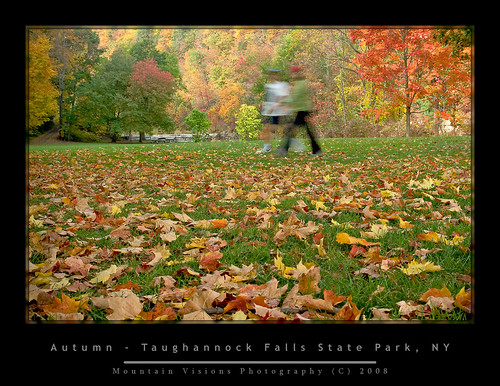
It occurred to me that despite autumn being my favorite time of the year that I never seem to make the most of it from a photography standpoint. Last year was so dry it seemed like the colors were not very bright or long lasting.

As of Columbus Day weekend 2008 I had absolutely nothing to show for what is so far a colorful autumn.

The high peaks in the Adirondacks are already well past peak as are the upper elevations of Vermont and NH. I had already seen some great images of the snow covered summits with colorful lower elevations and knew going south was better.


Leaf season peak foliage varies by elevation and localized climate (duh, but I just wanted to impress you with my common sense wisdom). Even two areas at the same elevation and latitude can differ if one is close to the water and the other inland, or has some other factor that influences local climate. Just like chasing spring wildflower season can last weeks if you do it right, foliage season can be mapped out to catch peak after peak.

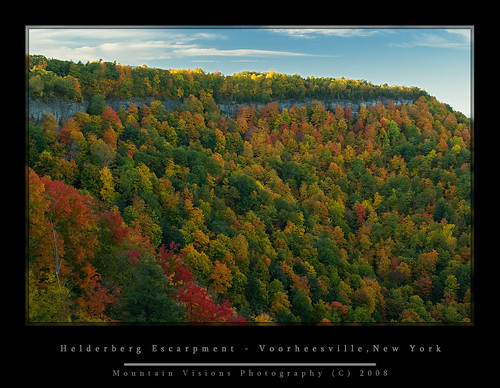
As it turned out the Heidelberg’s and Catskills are currently at peak and generally always around Columbus Day weekend.


So Saturday afternoon we headed to Thacher State Park to hike the Indian Ladder trail. The trail is almost paved in many spots, and no special hiking attire is required to hike the approximately one mile loop. Actually, it is one of the few places you will find (attractive) women hiking in heels and mini skirts!!!

I had hiked the Indian Ladder once before on a dreary spring day and had the place to myself, but I had a feeling this trail was typically packed and devoid of any wilderness character. Sure enough it was, only making photography more difficult. Making things worse, the picturesque waterfalls I had photographed in my spring sojourn were almost totally dry.


However, the near peak colors made up for the crowds and lack of water. I came away with a few nice shots and a nice hike only a short drive from home. I often fall into the same trap as everyone else by thinking I need to go someplace far away to capture great images, the truth is, you have a unique advantage when shooting close to home in creating the very best images, since you can time everything for optimal conditions.

Since Aim did not have off Monday, I needed to decide whether to do a day hike Sunday and Monday or go camping and save fuel, carbon emissions, and maximize shooting in an ideal setting. Aim did not seem too enthused about going to the West Canada lakes wilderness, which was near, or slightly past peak for a day hike, so I decided to go camping Sunday and Monday.

Checking the foliage report showed that the Catskills were at peak, and the Finger Lakes were near peak, with the Great Lakes regions not yet peaked.

Having enjoyed, but spent so little time in the Finger Lakes over the years, I decided to go south and west and enjoy this different part of the state for a few days of off-season camping at Robert Treman State Park.

Treman, unlike the bulk of NYS Parks, and DEC campsites is opened past Columbus Day. Actually, Nov 30th! So it makes a great base camp for camping and foliage photography in what I consider one of New York States gems.


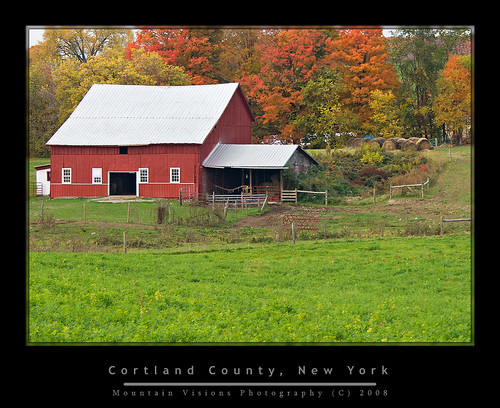
The Finger Lake region is obviously home to 5 of New York's largest lakes, but also it is home to New York’s largest wine region, and highest waterfalls. The area between this region and the Catskills is also some of New York’s most fertile farmland. New York is the #4 producer in the US of corn, and among the top in milk (#3), and apples (#2), cabbage (#3) and third in grape production. This region clearly shows the agricultural roots of NY. Fittingly, it is also home to New York’s (and perhaps the nations) best agricultural and veterinary school, Cornell University.


While if you’ve ever read any of my other trip reports you know my first love for a region of the diverse state of New York is the Adirondacks, but I’d be hard pressed to offer a better region as an example of New York than the Finger Lakes. To me the ruggedness, diversity, and refinement of the region are New York in a nutshell.

Robert H. Treman (there is also an Allan Treman a few miles north) is on the eastern edge of the Finger Lakes region, in the town of Ithaca. It is within 8 miles of 4 other state parks, and almost across the street from another equally beautiful park, Buttermilk Falls State Park.

I was actually surprised at the amount of people camping this weekend. There are 50+ sites at this park, and nearly all of them were filled. The last time we were here in September 2004, it was empty at the campground even though plenty of people were still out hiking on the trais.

The trails of these state parks are unique in themselves, they are aptly suited for those lacking either the fitness or desire to hike less civilized trails.

The trails of many of these Finger Lakes parks could actually be considered a history lesson of sorts, perhaps a great excuse for a teacher who loves to hike to organize a field trip ;-).


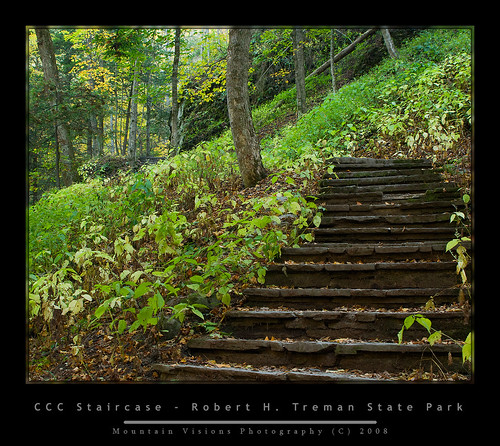
During the Great Depression, President Roosevelt started the CCC to put men to work doing something, even if most of the work that was done was essentially busy work. Still paying people to work rather than just giving them a check was better for the morale of a nation built on the puritan work ethic, and of course provided nearly of century of quality stonework that sees thousands of hikers a year.

A lot of the CCC work in the Finger Lakes is in need of serious repair, while other parts look brand new. Keeping in mind of course that this area sees a tremendous amount of water and temperature extremes resulting in many freeze/thaw cycles, that most of this stonework is still in great shape 80 years later.

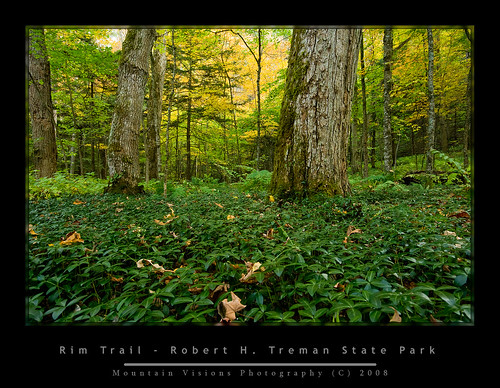
Many of the Finger Lakes state park trails have a similar and sensible naming system which goes like this: above the gorge is called the “Rim Trail” and in the gorge is called the “Gorge Trail”.


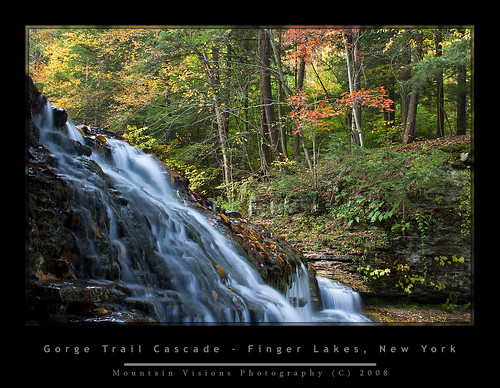
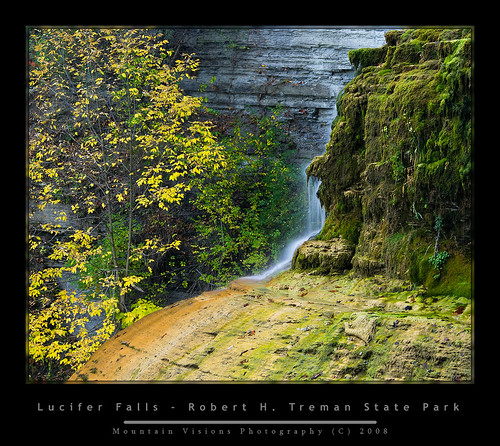
I hiked the 5 mile Rim/Gorge loop at Robert Treman, which goes to the top of Lucifer Falls, a cascade of over 112 feet. When you reach Lucifer Falls, the gorge is over 200ft deep. Along the trail, the gorge is filled with mosses, ferns, and in the warmer weather wildflowers. In the fall, the contrast of the changing leaves with the rich greens of the mosses and ferns can make for a spectacular contrast. The gorge is one waterfall or cascade after another, and honestly, if you dedicated yourself to shooting in the good light, you could spend years capturing the beauty found along this single 3-mile stretch. Although solitude and quiet contemplation you will not find during a weekend.


Monday, I woke up at 2:30am wide awake after hitting the sack at 8:30 the night before. I went back to sleep off and on till 5am when I decided to commit to the early start I had envisioned but expected not to make. It took me about 30 minutes to break down camp in the dark, and load up the Zuk.

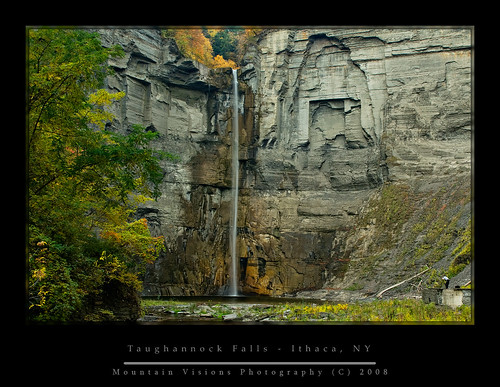
The plan was to get to Taughannock Falls State Park, about eight miles away before sunrise, unfortunately while the plan worked, the sun didn’t cooperate. Instead of the brilliant blue skies we were forecast to have, it was a hazy light overcast. This soft diffuse lighting is great for macro shots and shooting water, but not great for foliage. I wanted the soft golden morning glow and Mother Nature didn't cooperate. I almost stayed on the shores of Cayuga Lake, to photograph what looked to be an interesting purple sunrise through the haze. But we’ve all seen enough sunrises, it’s foliage we want.


Once again, you have the Rim Trail and the Gorge Trail. The last time I was at this park Aim and I did the Rim trail to the falls overlook. My goal was this time around was to go to the base of the falls. I don’t remember the distance but I think it is about a mile to the base.

Taughannock Falls is actually New York's, and the eastern US highest waterfall. This of course can often be debated depending on how you rate the fall (there are longer cascades for instance), but Taughannock Falls is a single purely vertical drop that CANNOT be contested. No matter how you measure it, it’s going to work out to an equivalent of 215 vertical feet. How impressive is this? Well, Niagara Falls is a mere 182 feet high. Of course Niagara Falls claim to fame isn’t it’s height, or width but the sheer volume of water the that passes over the falls. Taughannock Falls by comparison is merely a trickle most of the year, and in summer nearly dries up.

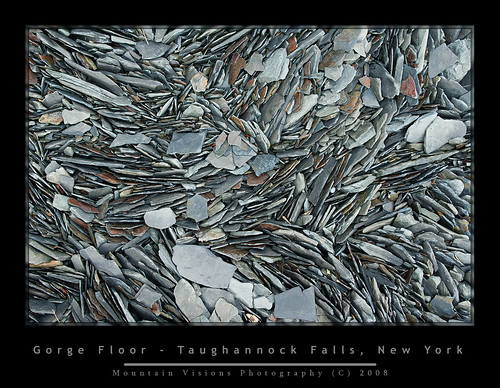
The area below the falls would make an excellent swimming hole in summer, aside from the fact that these gorges are inherently unstable. Anyone lacking the intelligence to determine where the piles of rubble at the base of the gorge came from, just needs to stand around for a while and listen for the popping, cracking, and eventually falling of the rocks above. Suffice to say while wandering around off the trail I was a bit uneasy. Having been hit in the (helmeted) head plenty of times while rock climbing, I don't take rock fall lightly.


Disappointed with the morning light, I looked around for some shots that benefited from the soft low contrast light, but eventually just headed out after having the park to myself for a few hours.

Overall a nice beautiful weekend and a change of pace for me.


Blogged with the Flock Browser