Monday, March 23, 2026

What's on the agenda for 2026? How about filling in the Adirondack bikepacking map?

Current established ADK bikepacking routes, most created by me with a few excecptions/enhancements such as a modified Wardsboro Loop and the old standard, Limekiln-Cedar River Road loop.


TLDR: This is almost a low hanging fruit type route with high accessibility from major upstate population centers. The route validates that there is insane and almost entirely untapped potential for bikepacking in the Adirondacks. It also begs the question? Why isn't there more established bikepacking in the Adirondacks? 


When looking at the above map, the southwest Adirondacks are lacking a true off-road bikepacking route. 

Can a route be created there? 

Although strictly in the deeply digitally scouted phase, which includes using multiple map sets, often overlayed because no single map set contains all the information, satellite imaging, and street view (losing Bing streetside this year hurts for digital scouting, TomTom had much better coverage than Google maps of rural areas) and trail descriptions/trip reports, mixed in with some on the ground knowledge from exploration unrelated to cycling, it's looking like there might be one of the better route opportunities to date in the entire Adirondacks for off-road remote wilderness bikepacking. 

Stats (as currently envisioned):

65mi, 5750ft, 85% off-pavement, about 40-50% off road (trails). 


What makes that so exciting is the central accessibility to the population centers of Syracuse and Albany. It's basically equidistant to both -less than 1.5 hours total drive from either. 

The route being proposed is the ideal archetype route for bikepacking in the Adirondacks, with a healthy mix of gravel and trails -focusing heavily on trails- and very little pavement, only used when absolutely necessary to continue the route. Worst case, every unverified trail is entirely unrideable by any sane rider and the noted alternate routes are used, it's still approximately 60% off-pavement and a mostly wilderness experience within the public boundaries of the Ferris Lake Wild Forest unit of the Adirondack Forest Preserve.

The obvious nature of this route should make you wonder why there isn't more bikepacking going on in the Adirondacks? 

Wednesday, March 18, 2026

Bikepacking: Testing Out the K9Sportsack


This was the initial day of the K9Sportsack back in September of 2025. By November we used it to do a 66mi (3 day, but really overnight) bikepacking trip in Arkansas in the Ouachita National Forest that would not have been remotely possible without it.


Sunday, March 15, 2026

Adventures of 2025 in Images

Still far from complete but I feel like this is the bulk of what I'll post for now. Keep in mind I've added photos all the years in review from 2008-2024 over the last few months, so the album with never truly be finished. But either way, enjoy a little slice of my adventures in 2025!


Direct link to the Flickr album can be found here: 2025 in Images or you can click the highlighted links below each photo on the photo collage to see full size individual images. Order is left to right, top to bottom. So 1-5 is top row, 5-10 is the second row and so on.


1. Marshall on Hurricane, 2. Skiing with Marshall, 3. Deore Purgatory, 4. All That the Light Touches Is Yours..., 5. Love, 6. Moose River Madness, 7. Marsh and Sen, 8. Enjoying the Campfire, 9. Seneca Falls, NY -Cayuga-Seneca Canal, 10. Buc-ee's, 11. Ouachita Trail Single Track, 12. My name is Marshall..., 13. November 2025, 14. Memphis Zoo, 15. Memphis Zoo, 16. Finger Lakes - Erie Canal Trail Bike Tour, 17. Sweet Relief, 18. I'll Always Rembember Us This Way, 19. Erie Canal Bicentennial Bike Tour, 20. Mid-fat at the Lake, 21. Bikewhat....?, 22. Spring on the Erie Canal Trail - New York, 23. Marsh on Moonshine, 24. Seneca, 25. Preview to Heart of the Finger Lakes Bike touring, 26. Looking out at 2026...Let's Roll!, 27. Breaking Away, 28. The Road to Paradox, 29. Autumn sunset on Blue Mountain, 30. Mashall backpacking in the Adirondacks


1. October Roads, 2. Autumn bikepacking in the Adirondacks, 3. Autumn at the Lake, 4. 1991 Trek Multitrack 7900 on the Erie Canal, 5. Transition season in the Keene Valley -Adirondacks, NY, 6. Cup of Contemplation, 7. Adirondack Autumn Views, 8. Big Wheels Keep On Turning, 9. Camping with Dogs: Seneca, 10. The Road to Paradox Panorama, 11. Sun Beams Over the Northern Adirondacks Descending Haystack Mountain, 12. Adirondack Groads: Gravel bikepacking in the Northwest Adirondacks, 13. Aim and the Marshmallow Man, 14. Gully Piton, 15. Grass River Revival, 16. BCXC In the Western Adirondacks, 17. The Pyramid, 18. Father and Daughter, 19. Oooops.....!!!! (WATERSHED BREWING - GENEVA, NY), 20. Marshall and crew on the Crows, 21. Mountain Biking Vermont: Green Mountains Fall Foliage at Sunset, 22. Rollin out, 23. Sunset snowshoeing at Moreau, 24. Descending Sugar Hill into Watkins Glen, 25. Bikepacking: Hector Falls - Hector, NY, 26. Crooked Lake Ice Cream Company - Hammondsport, NY, 27. I Love New York - bike touring / bikepacking edition, 28. Ski Trail, 29. Overwatch: Backpacking in the Adirondacks, 30. Sunset after glow over the Northern Adirondacks (panorama)

Friday, March 13, 2026

Essex Chain’s deteriorating logging roads: Missed recreational opportunity in an Adirondack landscape long shaped by human activity

Essex Chain road surface


I am a wilderness advocate and am not in favor of roads being built or maintained in wilderness areas. While I don't necessarily believe bicycles are anathema to the wilderness experience, I am ok with them not being allowed on hiking trails in wilderness areas. With over half the Adirondack Forest Preserve being open to bicycles, there is plenty of space for everyone to have a slice of the pie. From a personal perspective, I am never about denying other user groups access. I am more for everyone respecting the access rights of other user groups and doing their part to make it all work. 


However, you absolutely can, even in wilderness areas, allow bicycle travel via linear recreation corridors or bicycle corridors (as they are implemented within the Catskills Forest Preserve). These corridors wouldn't necessarily be on hiking trails (in the Catskills some are and some aren't but they also go over mountains in the Catskills whereas you could route them on logging roads in the Adirondacks) and wouldn't infringe on anyone's wilderness experience. In a lot of wilderness areas these corridors actually already existed as logging roads. Wilderness is more a state of mind then a reality. Virtually no area of the Adirondacks is untrammeled by man. And no matter how we try to cover it up, the signs of man will always be there by those with a keen eye. So spiting recreationalist and also dividing them into worthy and unworthy user groups with the concept that their 2-10ft wide sliver of infrastructure (trails and logging/woods roads) is going to ruin the environment and wilderness experience, is simply gaslighting. It just gives groups an excuse to be recreational bigots. Like anything, if you give someone the moral high ground to justify exclusion, they will likely fight to stay on top of that hill. 


In the case of the Essex Chain, it's a low use area with a massive logging road infrastructure that could have been phenomenal for family bikepacking, canoe camping, and backpacking. Being a relatively small unit, especially without the proposed bridge over the Cedar River, it's not a place the more hard core recreational users will ever flock to. It's also difficult to get to and then into (especially if paddling). The upside, it came pre-built with all the infrastructure necessary for ideal recreation for equestrian, XC skiers, and the disabled.  Instead, through a series of compromises they made Essex Chain as unfriendly as possible for everyone. As a result the roads weren't intentionally rewilded and bikes were allowed to access them, but they were not longer maintained at all beyond the MAPWD section (which is in phenomenal shape, despite and in part motor vehicle use beyond it's locked gates) to Fifth Lake. In many areas, especially closer to the Cedar River, these roads are no longer followable at all. This was a huge loss in a place (the Adirondacks) where even cutting a standard 2-foot wide hiking trail requires years of studies and then approvals, followed by the inevitable years of legal battles. Imagine having trails already cut and then deciding to abandon them simply to achieve a made up ideal in an area massively trammeled by man but even with (minimal) road maintenance would have still mostly reverted to nature within the unit boundaries, aside from the linear recreational corridors.  


I understand there is very small subsegment of folks that believes that our wild lands should be completely undeveloped. I respect that. For the folks that despise recreational infrastructure, they simply can choose to avoid it. In total, recreational infrastructure probably occupies less than 5% of total forest preserve and easement land area. That means that the small subsegment that eschews infrastructure has unfettered access to 95% of the forest preserve. Lands we all pay taxes to keep. Lands that are for all residents to use. 


This post isn't arguing we build more trails (at least not without any oversight) bur rather that we maintain and redesign existing trail beds. Even if every feasible snowmobile trail in the Forest Preserve was hardened (this merely means avoiding or bridging swampy sections that are frozen in winter) and maintained for 4 season use, likely no additional trees would need to be cut. And in essence no new infrastructure would actually be built on untrammeled lands.


Hiking trail as wide as a road (photo: Adirondack Council)

Pragmatically looking at it on a grand scale those roads are about as insignificant as anything that could be done to develop the Adirondacks, but would have made a huge difference in dispersing use and helping to protect other areas from looking like tanks rolled through. It also would have made more of an economic difference to local communities whom tourism is at least somewhat important. 


When you look at the trails in the High Peaks Wilderness, you realize bikes and logging roads aren't the bad guy. You realize that without properly designed trails, hikers are just as destructive and capable of creating, merely with the soles of their boots, a path as wide as those logging roads that were incongruent with nature. A trail or roadbed is merely a linear recreational corridor that concentrates use, preventing the rest of the forest from being impacted. It's a sacrificial sliver of our public recreational lands. It's not the end of wilderness or the death of our environment. 


This hiking trail, which likely never
saw a bike, has nearly 3ft of erosion
(photo: Adirondack Council)


Hardened trail being built in the largest wilderness area in NY
and the east coast. This is actually the approved surface by the
most restrictive protection group in the Adirondacks.
It doesn't look very wild to me.
(photo: Protect the Adirondacks)


Thursday, March 12, 2026

From a Never Bike Tourer to Bikepacking in the Adirondacks: The Full Circle Journey of Exploration and Discovery


Map of off-pavement and generally off-road bikepacking routes in the Adirondacks of New York State
Adirondack bikepacking routes I created as of Dec 31, 2025


Back in 2020 during Covid I took my bikes to Arkansas to visit family. I hadn't ridden in Arkansas in 20 years and I was excited to ride there, even if it was a long way from my old stomping grounds. I got back from a ride and a family member asked me "with all the outdoors stuff you do, have you ever done any bike touring? Would you consider it?"


Without hesitation I said, "no, absolutely not." The reason I gave was I do a lot of slow deliberate wilderness type activities and to me, riding was about going fast. 50mph descents with my hair on fire. It was about cranking through turns and maintaining a high average speed and crushing sprints where I felt the need to. Every ride was an individual time trial. I was enjoying picking off Strava KOMs (I'm a good sprinter so those flat KOMs are actually achievable) and just having fun riding. No need to burden myself with a ton of gear and turn every ride into a multi-day planning and packing event. 


Not too long after that I got more into gravel riding. Despite what the bike industry tells us, gravel isn't a new thing, when I was a student at the University of Arkansas we often rode gravel on mountain bikes, usually to bridge single track sections, sometimes to get to trails in the Ozark NF or Arkansas State Parks from campus, and after college I rode a lot of gravel on my hard tail because my back just couldn't handle the multi-use (hiking trail) single track that was the norm in New York. Plus, gravel was that sweet spot between MTB and road. It was out in nature, quieter roads, sometimes it could be chunky or even mildly technical (Vermont Class 4 roads are a great example of this), but it was still spinning gears and riding fast. 
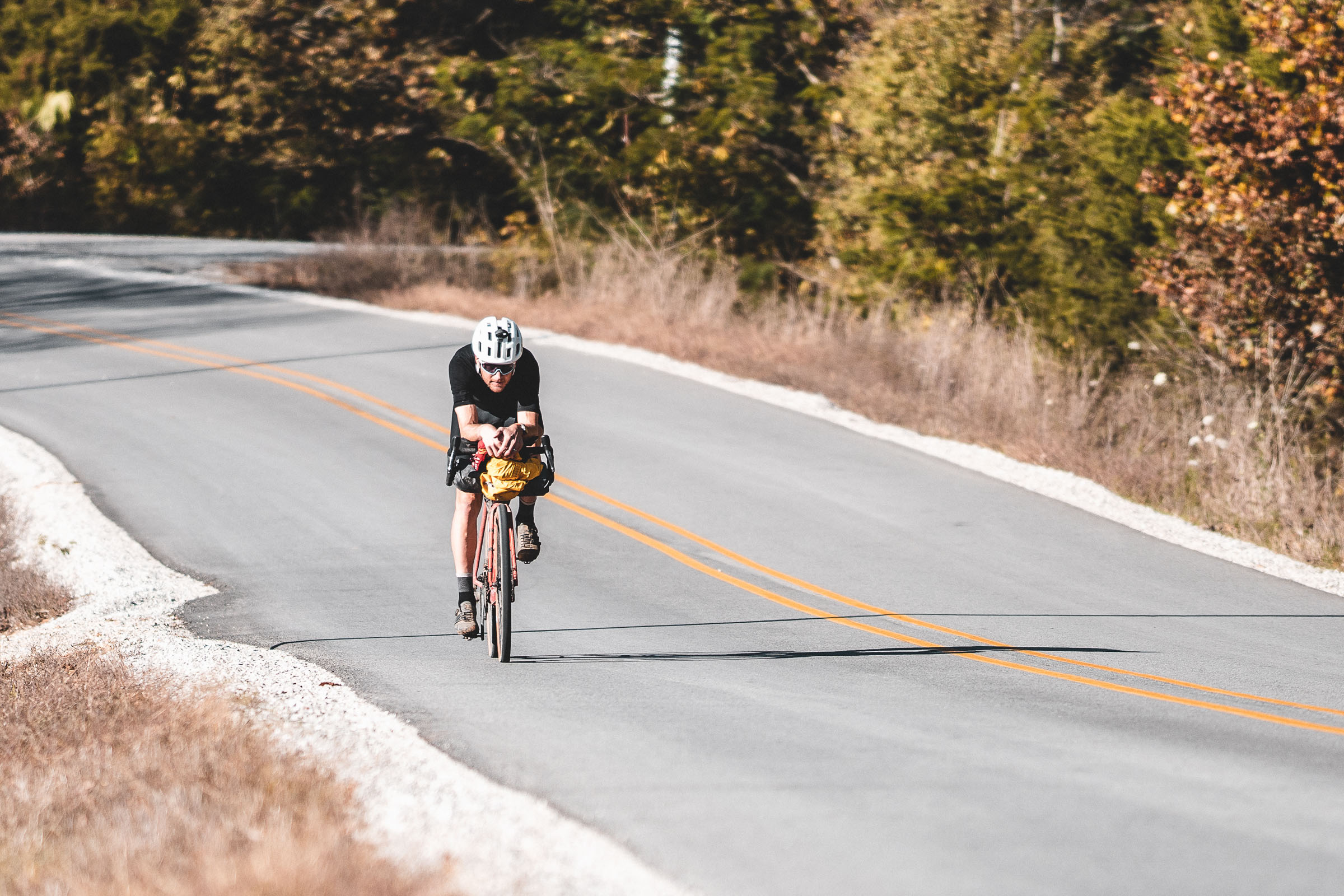
Ted King on a paved section of the 1000 mile Arkansas High Country Race in 2020 (credit bikepacking.com)


I'm not sure how or why (besides targeted Google advertising, of course) but I saw the Arkansas High Country Race and Vermonter Ted King had won it. I thought that looked cool. They rode fast (relatively speaking), they traveled fairly light, and they looked like they were still riding hard. It erased my pre-conceptions of a bike tourer having 100L of panniers filled with heavy cast iron. In my mind, bike touring was essentially backpacking in the 1970s. Except, like backpacking, bike touring has evolved and with it came the ultralight bikepacking. This isn't much different than the evolution of backpacking where people went from cast iron to JetBoils with titanium mugs, or 10lb canvas tents to 1lb frameless tarp tents, and external framed packs to carry that load to lighter, more compact and nimble internal frame packs. 


Bikepacking is a volatile term. Sometimes it's used to blanket describe riding a bike to multiple points over multiple days. To others its covering the same terrain in the same style you would backpack. Too me, bikepacking is anywhere you NEED to use a water filter. So gravel roads or even paved roads in the middle of nowhere can be bikepacking. Bike touring is anywhere you simply fill your water from a hose, fountain machine, or buy bottles. I realize people can and will endlessly debate what it means to them, and I'm not here to tell you what it is or it isn't. That's up to you. I once debated someone that said if you weren't literally pushing or even carrying your bike for most of the trip, it was bike touring. To me, if I'm carrying my bike half the trip, I'd rather leave it home and go backpacking. I didn't buy a bike, deal with all the mechanical nuance and cost, just to need a pair of hiking boots. I want to ride it!


(credit bikepacking.com and Restrap)

So how did I get from "hell no" to "maybe I'll try it" to "I'm all in" and now creating routes in the vast Adirondack Wilderness? Well, sadly my dog Colvin, died in 2023. In his early years we did some mountain biking, but by the time I got back into riding, even though he was still bagging difficult peaks for a 10yo dog in 2020, it was too much to ask of him to ride with me. His final years were spent hiking, sometimes very hard peaks or routes which he enjoyed, and that was best for him. I'd ride on rest days for him but we focused on getting him out into the mountains and local trails as much as possible. About 7 months later in the summer of 2023 I got my next gen trail dog, Marshall. By 2024 I realized this was the time to get back into mountain biking and off-road bikepacking and make use of Marshall's endless energy. He is my first truly high energy dog in the sense he doesn't have a chill switch. It's go, go, go. 


My name is Marshall...You have a small window (about 5 years, ages 2-7) to ride hard with your dog. Hard? This absolutely doesn't mean abuse them with overuse, it just means where they can ride* day to day and recover optimally. Where riding at 20mph for short stretches and 15-30mi days are not pushing them to the limit. After that window you need to start considering the dogs recovery much more, mayber sticking to more technical single track where you are riding much slower and even moving on to a cart and bike touring. I will say people tend to overthink how fast a MTBer is riding. Typically average speed is under 10mph for the day, usually between 6-10mph for single track trails. That is a 6-10min mile, and trust me, your dog isn't working that hard in proper temps running 10 min miles over a typical 10-20mi day if they are already properly conditioned.  A 10min mile is 250min or about 4 hours of activity over an 6-8 hour day of riding if you stop and smell the roses, filter water, go for a swim, and take some photos.  Again, not a serious strain on a properly conditioned dog in the optimal age range. Add in a backpack like the K9 Sportsack and you can ride probably around 40-45mi on the high end if you bag the dog for long gravel descents, pavement, and long flat stretches of gravel. 

*when I use the term ride, I'm riding and the dog is running or the dog may be in the Sportsack, but he's never at the wheel, my dog training skills only go so far and he loves to run as much as I love to bike


Well, that is the backstory on how I got into bikepacking and why I began developing routes in the Adirondack Forest Preserve. I'll be posting those routes here along with maps, route GPX, photos and trip reports. 


As a side note: I've gotten some mild natured hate from some gate keepers in the Adirondack cycling community. Don't ruin a good thing for us was the consensus. But I promise you this, in 3 years of Adirondacks bikepacking, mostly on weekends, I have NEVER seen another cyclist either day riding or bikepacking. NOT. ONE. What that tells me is not only are ADK backpackers a secretive bunch (afterall, to get mad means you do ride, but to see no evidence means you keep it quiet), but they may not even exist at all in numbers necessary to prove they do. I guess what I'm saying is I understand the sentiment but I don't believe sharing my routes is going to change bikepacking in the Adirondacks dramatically in the near future. And if it does long term, it will likely mean better infrastructure and more potential route terrain. I do, however, hope it changes the anti-bike culture in the Adirondacks which is sort of ingrained in people due to the Forever Wild wilderness ethic that permeates folks who know of and love the Adirondacks. 

Wednesday, March 11, 2026

Cycling to the top of Cohoes Falls: The Waterford Flight of Locks

Waterford Flight of Locks
At the top of the Waterford Flight of Locks


Those in the Capital Region of New York might not pay much attention to the Erie or Champlain Canals; afterall, that which surrounds us is often least visible.

From the gatehouse of the first lock on the Waterford Flight of Locks


Waterford, New York is the crossroads of the Champlain and Erie Canals. It is also home to the worlds highest elevation gaining series of successive locks. There are single locks both on the Erie Canal and around the world that gain more elevation in a single lock than any of the Waterford Flight of Locks, but none gain the 169ft the Waterford Flight gains in about 1.5 miles to bring boats above Cohoes Falls, which is the Capital Regions version of Niagara Falls. A true engineering feat.


I've lived at the cross roads of the Erie and Champlain Canal for a good chunk of my adult life and like most people didn't pay much attention to it. When the Empire State Trail, which follows greenways and bike paths up the Hudson River from NYC to Albany, and then to Buffalo (west on the Erie Canal) and Canada (north on the Champlain Canal) was unveiled I also dismissed that. The main reason was I hate multi-use paths. Kids, pets, roller bladers, joggers and walkers all share these paths and as a cyclist you are non protected and most at risk for getting injured. A walker can step out of the way at the last second, but if I cyclist makes a last second, last ditch move, it could end with them planting face on the pavement.

Running from NYC to Canada, 750-mile Empire State Trail is now complete
The Empire State Trail which is formed by the Hudson River Greeway, the Erie Canal and the Champlain Canal


Over the last 6 years I've gotten deeper and deeper back into recreational cycling and along the way, I've become more and more road averse. Drivers are just very distracted today, even those who aren't on their phones, and cars are bigger, cycling infrastructure on road ways is still largely just a 3ft shoulder in most places, and less in plenty. As a result I've gravitated to gravel, trails, and bike paths.


The rebirth of the Erie Canal as a mostly protected bike path for a good chunk of it's 500 (NYC to Buffalo) miles and it's proximity to Amtrak service out of the Capital Region (there are 3 stations within 20 miles of the Erie and Champlain Canal intersecton) made it very appealing to me over time. I've both ridden the Empire State Trail \locally in the Capital Region and in sections via Amtrak.

Spring on the Erie Canal Trail - New York
Smelling the flowers on the Erie Canal Trail outside of Weedsport, NY

While not a wilderness experience by any means, there are plenty of spots on the EST that you will find yourself surrounded by nature.  


Wednesday, February 25, 2026

Bone Bruises...Light isn't always right! (The Trap Dike)

(editors note: this has been sitting in my drafts folder for 14 years....time to unleash it, I'm publishing it with the current date but will archive it to Aug 1, 2012)


Group ascending the Trap Dike in the Adirondacks High Peaks. This is a Class 3 (with about 10ft of class 4) scramble


A few weeks ago I did a scramble in the Adirondacks (Trap Dike). I chose to wear running shoes because I knew the group would be moving fast and the approach to the start of the scramble was fairly flat and fairly soft on the feet. Moreover, I knew I'd be swimming, rather than hiking, the most foot unfriendly section of the hike in (Avalanche Pass).

That blue dot in the water is me swimming Avalanche Lake with my pack and gear in a drybag. I swam 400yds in under 10 minutes, and was dressed by the time the hikers arrived


However, I didn't really consider the descent, which of course is where the majority of the impact is on any hike. During the course of the ascent, I switched to my sticky rubber approach shoes (sort of a climbing shoe merged with a running shoe). These are a little small on me, but work perfectly for the ascents, where a tighter shoe offers more control and climbs better. These shoes are very thin to begin with, and my foot got tender under the ball on the ascent of the 3rd and 4th class terrain, but the superficial hot spot turned into deeper pain by the end of the 13 mile day. 

What went wrong? The bottom line, I was carrying 15-20lbs on my back, I was descending a fairly typical northeastern rock hop, I didn't have my trekking poles and I was wearing running shoes designed for light duty trail running on easy trails. 

The end result, a bone bruise on the ball of the foot. I followed up this with a 20 mile weekend in the mountains, and a 30 mile weekend on two of America's toughest trails. Each hike it became more evident that what was wrong wasn't just superficial. 

I admire people who are svelte and nimble enough to get away with ultralight shoes, while hiking along with little or no equipment, but that isn't me. I'm always prepared on the trail, I'm self sufficient. Besides the only way to prepare to carry 20, 30, 40, 50, 60 or more pounds in the mountains is to load up and go hiking. 

Nevertheless, it's ironic that I have solved the issues of my musculoskeletal inflammatory/overuse injuries in the last 8 months by eating a moderately to highly anti-inflammatory diet, only to be back on the injured list with a bone bruise I could have avoided. 

Hopefully someone reading this blog can learn from my own stupidity, which is definitely not that off the mark of what we are fed on a daily basis from the media gurus of the mountain world. After all, just because magazines make a fortune telling you how everything you own is heavy and overbuilt and should be replaced, doesn't mean it is. Sometimes a few extra ounces or a little extra bulk or a little more durability is worth it in the long run.


Wednesday, February 18, 2026

Remodeling the Mountain Visions blog


Howdy subscribers, 

I posted a while back I was rededicating myself to the blog (and Flickr and other content host) and less Meta hosted/controlled content. Meta serves a purpose, sort of like an RSS reader, but it shouldn't be where the stories of your adventures are locked in forever. 

I'm slowly going through and updating abandoned/broken links in the sidebars and in general cleaning them up to reflect current information and things that are important to me.

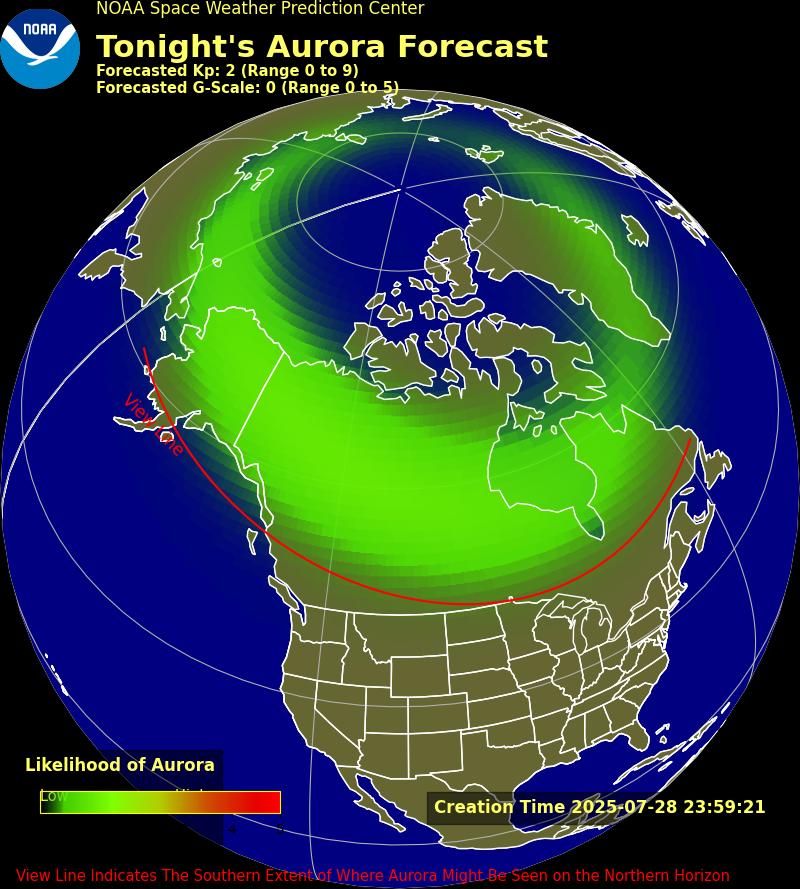
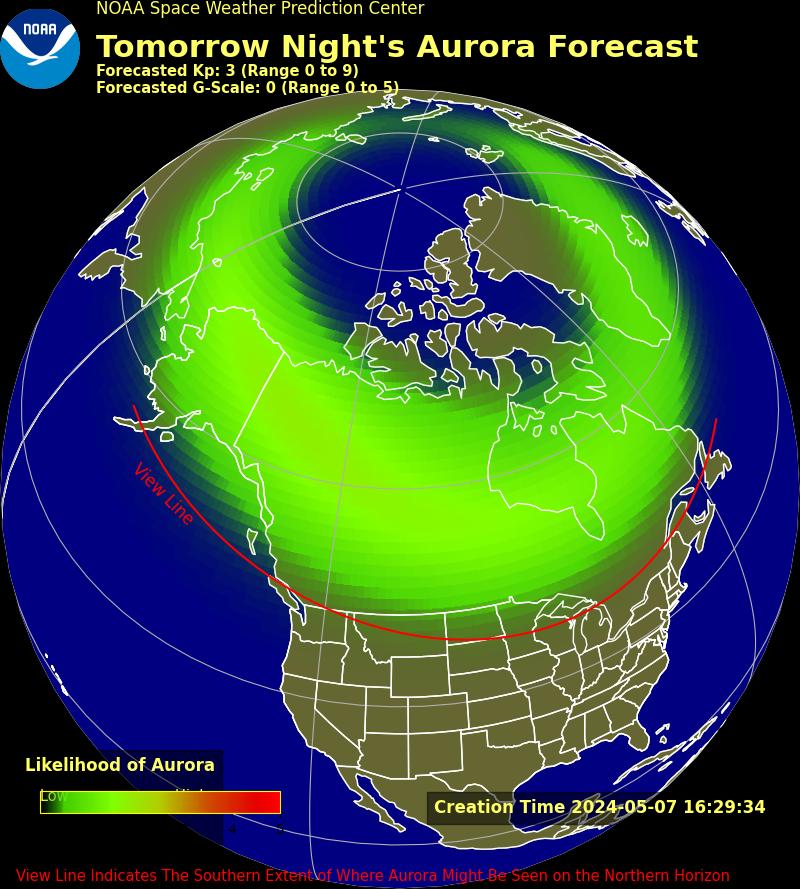
I hope to eventually clean up the sidebars so they are useful again. I've already updated the broken aurora map and the Adirondack Ice Conditions and NH Avalanche conditions.

I've also fixed all of the subscribe options in the top left corner. So if you want to subscribe, I highly recommend Feedly but there are additional options below. I may also put an option for email subscription in the future. 

At this point most of the broken links have been removed. Any that remain are place holders so I can update them with current relevant information. 

I'll be chipping away at it as time allows. 

Thanks for viewing Mountain Visions!


Saturday, February 14, 2026

Colvin in a Moment


Gotcha Day 2/14/2010 

Left this Earth 1/14/2023

Missed but not forgotten


Monday, February 9, 2026

Bikepacking: 1991 Trek Multi-track 7900 loaded on the Erie Canal Trail (Empire State Trail)

1991 Trek Multitrack 7900 on the Erie Canal
Trek 7900 fully rigged and loaded on day 6 of the Heart of the Finger Lakes Route which used the Erie Canal, Cayuga-Seneca Canal and looper around the Finger Lakesfrom Syracuse Amtrak Station


These old Treks were some of the first mass produced gravel type bikes. There were others but none were so readily available. Of course back then gravel bikes weren't a genre so these were sold as hybrids with flat bars. 


It turns out, as long as you don't require disc brakes (and trust me, marketing is a powerful thing but a set of V-brakes with salmon Koolstops are going to stop your bike at least as well as most mechanical disc) these are ideal mixed surface touring bikes/gravel bikes. 


The higher end models like the 7900 came with premium level MTB components. Deore, LX, XT depending on year and a 700c MTB rim with MTB hubs and spacing. Rack mounts, fender mounts. 


Drop bar conversion on a 6/7/8/9 speed just meant a pull adapter for the front derailleur or even easier a bar end friction shifter (I've done both on the two I own). 


The gearing on this is far superior to any modern 1x or even 2x drive train. It's a little less than the 670% of my 7900 but still around 600% with nice tight spacing, a true high gear and a very good low gear (24x34). 


As seen, the bike is outfitted with a Soma Rakku 2 rear rack with Topeak Versa Cages and dry bags (this wasn't an aesthetic choice or a function choice, we didn't finish the second set of panniers), an aliexpress Pizza Rack knock off on front with some creative but very secure attachment, homemade (home modified) military sustainment pouch micro panniers that cost $2.50 each and an hour of hour time per set to modify. The feed bag is a Moosetreks which I scored 5 of for $65 total (shipped). If you know the outrageous cost of bikepacking labeled equuipment you know these climbing chalk bags are not worth $60 each. The Moosetreks feed bag is as nice as any other feed bag on the market and even at it's $27 retail price is still a steal. 


I added a downtube bottle mount for extra capacity. I know a lot of folks dislike the down tube bottle mount but a pro tip, don't drink directly out of it. You just pour the liquid into one of your other bottles.  


The rear derailleur is a takeoff from a newer (90s model) bike. It's XT 8spd vs Deore 7spd. It's running a 9spd cassette. We used microshift R9 brake shift levers, but ended up going with a Sunrace 3x front friction shifter instead of a pull adapter on the front brake shifter. Sunrace bought Sturmey Archer years ago and makes some high quality parts. It's not an AliExpress quality company.  While my preference is cantilever vs v-brakes, I opted for the lower maintenance, higher max stopping power of the XT V-brakes we had from a takeoff mountain bike in the parts bin. Cantis offer better feel and if adjusted properly will stop with plenty of power, but they also require fairly constant maintenance. 


The rear wheel I had to go with a new version. I went with a Weinman Zac 19 in my preferred 36 spoke configuration. There was nothing wrong with the original rim, but it was dished for a 7speed cassette and once again, I didn't have time to redish or bring it somewhere to be redished. 


As shown the bike is outfitted with 38mm Challenge Gravel Grinder tires on 18 and 19mm rims. I love these tires for the gravel I typically ride, and they were great on this trip, but they tend to wear fairly fast on pavement heavy riding. I feel like 35mm is the ideal tire width for unloaded road riding. 38mm might be a little narrow but the riders on this bike won't be heavier than 130lbs and fully loaded this bike is about 160lbs (bike, gear, rider). The multitracks vary in max tire width but 40-45mm is typical (sometimes 50mm possible up front). When this bike needs new tires I will upgrade to 40-45mm for better gravel and rough road performance and comfort. 


20210823_182839_HDR-01
Trek 7900 in original form as purchased for $100

Overall, this is very solid frame up build using a mix of original parts and some parts bin or selected new parts where necessary. Every bearing and part was stripped and cleaned. This is essentially a new bike! 

20250511_195114
Initial test ride before final adjustments and bar taping. All the racks are visible here and the down tube bottle mount. I got creative with the front rack mount but it's very secure and I wouldn't hesitate to run 20lbs on it.


Saturday, January 24, 2026

Adventures of 2025 in Images

2025 in Images
^^^^^Click through the album to see all the 2025 images^^^^


Far from a finished product, this is the most images I've uploaded in a year for quite a few years. 

I like to sort of leave the bulk editing to the shoulder seasons when things settle down for a little bit most years. Some years Nov-Dec is more active than others, but typically my winter doesn't start until January, giving me plenty of time to get photos sorted, culled, processed and uploaded.

Looking forward to filling this out a little more as the dead period between seasons seems to be coming to an end with this weekends storm. 

Have a happy and adventure filled 2026!


Friday, January 23, 2026

Meta (Facebook) Walled Gardens...They were fun at first but now it's time to make information open again!


I've grown a little tired of the increasing walled gardens where your information is public but it's locked behind a information paywall of sorts that only benefits the site owner. 

Blogger (Google) makes money off these blogs for sure, or they would kill off blogger, but anyone can search for and access them.* And that means information is freely available. 

I've planned many a trip off a blog trip report that wasn't meant as a source of beta. Just folks musings. And I'm sure folks have done the same with Mountain Visions.  

Meta sites on the other hand (Facebooks parent company) still allow you to overshare but they hold all the information behind a sort of paywall. This benefits absolutely no one but Meta and actually is the entire antithesis of why the internet became so important. 

I think the big appeal early on with Facebook was your post were viewed by most of the folks you cared about.  People you likely interacted with in real life. Increasingly, feeds are clogged with ads and recommended post. And with people friending (follow) folks they don't even know feeds are getting clogged. It's basically turning into a Chinese style internet where everything is controlled by one company including what the algorithm wants you to see. Sure engagement is higher but thats as short term dopamine boost, not a long term solution. 

I've mused enough, the nitty gritty of my plan -though I've planned on this before- is to try to cross post for now to the blog also while (and this is the ambitious part), retroactively pull old Meta post and place them on the blog. I'm skeptical this happens with any volume, but I'd like to give it a shot. 

*Many search engines strongly priortize commercial, sales and paid sites. I use Mojeek when trying to find things I don't have to pay for. Like if you search "bikepacking" you'll get a lot of commercial sites. Or places to buy gear. That's great, but I want to search trip reports and personal blogs. Mojeek does that best. And also, although it's Russian, Yandex tends to be better as well. Especially for image searches.