Wednesday, February 23, 2011

Colvin Surveys Cascade and Porter

Colvin, wearing a Ruff Wear Doubleback harness, descending Cascade Mountain
Wow, it didn’t occur to me till today that Colvin Harrison had never summited a 46-R. Now don’t think he’s been neglected, it’s not like he hasn’t been up two of the highest peaks in New Hampshire and a (sub) summit of Vermont’s highest peak in the first 9 months he was with us, just none of the Adirondack high peaks from whom his namesake surveyed the Adirondacks over 130 years ago.

So we picked a day when the wind chills were hovering in the -27F (-32C) range, and the ambient temps at or below 0 on the summit for Colvin to summit his first two Adirondack high peaks! Despite the cold, it was actually a beautiful sunny day with perfect snow conditions.

This forecast data is from an experimental NWS weather forecaster out of Burlington, VT. Unfortunately I didn't get a screen shot before we started hiking. Still, winds were forecast in the 30s mph all day, and it actually was trending warmer as the evening progressed. Conditions at 5pm were at least as bad as 7pm.
 
If you have occasionally read this blog, you know I despise the Adirondack High Peaks Wilderness with a passion. That sounds bloody awful, perhaps I should explain (again). I hate the crowds, rules and fees of the Adirondack High Peaks Wilderness, which just happens to be home of the bulk of the high peaks. While I summited several ADK high peaks in the weeks preceding and subsequent to Colvin Harrison’s arrival in New York, he just wasn’t trail ready till late March of 2010. 

Unfortunately, because I was k9less during that time, I was able to use different access points than normal for all the high peaks I summited. The peaks that were in the HPW I reached via the Adirondack Mountain Reserve which is privately owned but accessible to humans (no dogs) via easements. This approach, while not a solitary endeavor, is usually less used than the other access points. 

Then the spring came, and mud season with it. We had planned for him to hike the Colvin Range last spring, but it got pushed off by bad weather, and eventually by paddling season that is a necessary escape from the summer heat and humidity.

So oddly, it was 53 weeks before Colvin reached the summit of his first Adirondack high peak. Originally the Upper and Lower Wolfjaws were planned for various reasons, including solitude and the irony of a dogs first 46-R being the “wolfjaws”, but the closer parking area being unploughed and not wanting to walk in the road (almost no shoulder during the winter with the snow banks) while trucks and cars whizzed by at 55mph, I aborted the Wolfjaws via Deer Brook. And damn the cliche, decided to climb Cascade and Porter, two of the Adirondacks easiest high peaks and often an aspiring 46-Rs first ticks on a checklist. 


Aim ascending Cascade (Jan 2005)
Cascade is a mere 2.4 miles from the trail head which begins at a lofty 2000ft. Being one of the smallest of the 46-R’s it’s a mere 2000ft ascent. In terms of steepness, it’s pretty mellow. Even the steeper sections aren’t all that steep.  And throwing in Porter adds another 1.4 miles round trip, but a mere 460ft elevation gain/loss over that 1.4 miles. Precisely why Cascade is often the very first high peak people climb.

We arrived at the Cascade/Pitchoff trail head to find it packed. Cascade and Giant Mountain are probably the two most hiked high peaks in the Adirondacks, and on any weekend day you will find both trail heads packed with cars. So I drove towards Lake Placid and stopped at the Cascade ski shop, then we drove up Mountain Road to check out the conditions on the Jack Rabbit trail. Plenty of good quality snow despite the recent heat wave. When we got back to Cascade there were still too many people on the trail, so we took a little nap in the warm sun (yes, direct sun in a car is warm even when it’s around zero outside). 2 hours later the parking areas were thinning out, and we were off. 

Colvin at a wind break  just below the summit.

Obviously I was accepting I was going to be sharing the trail with people, unlike the desolate Wolfjaws via Route 73. However, while I was ok with making a deal with the Devil to get a good hike in on a pristine day. I didn’t want to be ascending during an exodus of hikers. Killing a few hours so I could catch the late afternoon light from the summits and only see a few people on the trail was easy enough. If timed just right I wouldn’t even need to use my headlamp. Very rarely are conditions this clear in the Adirondacks, and Cascade is a mountain that lives up to it’s record summit attempts.  You can see 30 of 46 high peaks from it’s completely unbstructed summit and the best time to do so is in the early morning or late afternoon when the mountains really stand out with some depth.
 
Aside from that, I’ve always hiked Cascade either before sunrise or on a weekday. So despite the throngs of hikers that ascend it during peak days, I’ve pretty much always had the upper mountain to myself. Yep, I’ve only seen 2 other people on the summit of Cascade ever! 


The photographer taking in the early morning light, alone on one of the Adirondacks most hiked peaks (January 2008)

If I had any doubts about the conditions on the summit, I didn’t need verbal verification. The last group of hikers we saw descending were dressed like they were on a winter ascent of Denali, one of the coldest major summits on earth. 

Colvin below the summit

Colvin and I were on the summit of Cascade in about 2 hours which wasn’t bad considering I had to attempt a field repair of a rivet on my MSR Denali. Messing with bolts, washers and nuts in 0F temps is pretty much futile unless it’s life and death -as I write this, it just occurred to me that in 2003 I had a crampon malfunction on Cascade as well.  Eventually I gave up, I ditched the snowshoes below the summit of Cascade.

Ascent up the summit slabs (January 2005).

The climb up the summit slabs of Cascade was mostly bare rock with some avoidable ice, only one or two spots would crampons have made things safer, naturally I fell in one of those spots (the safer of the two, and the spot I fully expected to go down) on descent, otherwise bare booted to the summit over the rock, snow and ice without incident.

Colvin just feet below the summit as we began our descent.


Caney a few feet ahead of Colvin (January 2008 sunrise) 50mm vs about 105mm, side lit vs. backlit background. Notice the difference in compression and dimension with the telephoto vs the normal lens and the different lighting?

Colvin did great. There was a section I thought he might have problems with, and the wind has never been his favorite force of nature. But he shot up the last .3 of a mile almost effortlessly picking the marked route perfectly unless he saw a better route. I didn’t have to give him an assist or verbal cues up or down. He’s getting much better on the trail and much more confident.

Another cold winter day on Cascade (Jan 2004)
We were both pretty cold when we got back to the Porter intersection, though we both had all our insulating layers in my pack if we needed more heat than movement would provide. I debated not going to Porter, it was already after 5pm, but the trail was well packed and descent would be fast. In the end it was too easy to pass up this BOGO summit. Besides, herding dogs do winter ascents of Cascade as a warm-up before they eat breakfast and tick off a great Range Traverse in the afternoon. Colvin expected more than a measly 4.8 miles, so I put my snowshoes on while Colvin and I snacked and hydrated.

We made quick time to Porter as we tried to warm up. The 1.4 miles round trip took about 30 minutes. We were back at the Cascade intersection by 5:30pm. The 2 mile descent took about 45 minutes sans snowshoes with only a few butt glissades where my bare boots met an icy patch as I jogged down hill. Colvin would see me jogging and sprint ahead full blast, come to a skidding stop in the snow and sprint back up the trail as I continued jogging down. As is typical, he generally hikes/sprints at least 50% more miles than the actual hike requires.

We were back at the car by 6:15p with just enough light to not need the headlamp. 

Total stats for the hike. 2 ADK high peaks, 4600 ft gain/loss over 6.2 miles in 3 hours 30 minutes.  Winds 30mph from the North, 0F ambient, and unlimited visibility. Pretty much a perfect mid winter day!!!  


Thursday, January 27, 2011

Going mirrorless in the mountains of New Zealand!

Some time ago I wrote a rather lengthy and extensive review of the Samsung TL500/EX1. Though the review covers the history behind selecting this camera, it all boiled down to having something that almost fits into a pocket but produces professional quality imaging. This sort of camera isn't quite ready to replace a larger SLR system in utility or image quality, but it will go places an SLR probably won't and gives every photographer another weapon in the arsenal.

Having the camera now for 5 months, I am always pleased with the output, even when testing the technological bounds of the TL500. So upon seeing some skiing videos that used the TL500 and NX10, I was glad to learn the Samsung TL500 was in fact being used in professional settings for the purposes I originally envisioned a camera like this.


Some images I've shot with the TL500 (EX1) can be found here:


The full review of the EX1 / TL500 can be found here at Enticing The Light. Not recommended reading for the casual photographer or snap shooter, but certainly the sort of review that will leave you without surprises when Amazon delivers it to your doorstep!

What I can add post review is that this camera has performed admirably in all sorts of weather for me so far. From 90 degree sunny days to -10F winter days. Coupled with a Lowe Pro Terraclime 30 case, it is really just shy of the ultimate on the go compact that pretty much leaves you without an excuse to come home with a shot or two. Besides a few software updates, I'd have weather sealed it to make it the perfect on the go professional grade compact. Inclusive of those minor issues, it's a joy to use outdoors and enables me to get more than web quality snapshots when I don't want to (or can't) carry an SLR!

A little more fun from the New Zealand shoot with some really insane skiing (some of us would just be happy to be able to turn in both directions when needed, this is just insane!)...


Wednesday, January 19, 2011

Winter Tires versus All-Season Tires, The Great Dilemma

(Part 1)

Almost every cars stock tires are junk. Sure, if you spend enough on a car it probably comes with acceptable all-season tires, but if you spend enough on a car you probably should be getting more than "acceptable" traction and handling from your cars most important equipment. Suffice to say, whether you spend $18,000, $30,000 or $80,000 your cars cheapest OEM equipment is probably the tires.

When I got my Suzuki SX4 AWD in the spring of 2008, I ran the stock tires till the winter of 08/09 which was enough time to put on 18,000 miles over 9 months. The Bridgestone Turanza EL400 weren't great, but they weren't entirely unsafe. Honestly, they were probably a little better or a little worse than 90% of cars under $40,000 OEM treads. As a matter of fact, these are standard on tons of cars such as the Mazda 3, Hyundais, and Toyotas. However, with all the warm wet or cold snowless winters we were having I figured I might be able to get away with a set of higher end all-season tires for the first year with the AWD system in an effort to save a few bucks while also putting better (safer) 3 season tires on my car. So the goal was to put new tires on between November and December and get the most out of the 1st years tread. I expected to run these only 1 year as my winter tire, then get dedicated winter tires the next winter.

In this video, you can see how average the Turanza EL400s handle ice vs. a Blizzak level snow and ice tire 


One thing to keep in mind is AWD or 4WD in theory are great. Without going into detail on the differences (and no, they aren't the same, they work completely differently), FWD/AWD/4WD all still require good tires to move the car. Bad tires on the best AWD system are much worse then really good snow and ice tires on the average front wheel drive (FWD) car. I can't tell you how many times I safely passed Subaru's and Jeeps driving down a snow covered Northway or languished behind them on one lane roads, while I was using top of the line snow tires on my front wheel drive (FWD) Ford Focus, and I'd guess they were using stock tires.

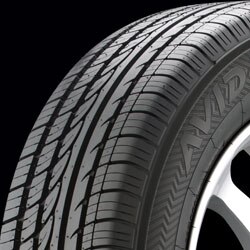
We had very few real snow falls in 08/09 and a very warm winter. When it did snow it was usually a warm slushy snow that was ideal for the Avid TRZ's which clear slush extremely well. Then we had a very cold and dry winter in 09/10 that saw very little snow till the early spring when the arctic high that was camped out over us all winter left. To my surprise, because of the conditions, I actually got 2 winters out of my Yokohama Avid TRZ's without really having any complaints. As a matter of fact, the first winter they were on par with a snow tire except on icy conditions. Even last winter I had very little trouble during rare and often unspectacular snowfalls. One note on the Avid TRZ's, they are a hybrid tire. They are built with "Three Ride Zones" which go from outside to inside on the tread. One of the zones is a winter tread compound. So, while this wasn't a dedicated snow tire, it was significantly better than 99% of the three season tires on the market on snow and ice.


The AVID TRZ features a silica-enhanced all-season tread compound that remains more pliable at lower temperatures to increase cold weather traction. The compound is molded into an asymmetric tread design featuring Three Ride Zones (TRZ). The outside zone features large blocks and continuous ribs to focus dry road cornering grip, while the center zone features circumferential grooves to concentrate on water evacuation and the inner zone features lateral grooves and sipes to emphasize wintertime traction. The tire's internal structure includes twin steel belts reinforced by spirally wrapped nylon, along with a carcass that sandwiches high-density sidewall filler between polyester cord plies to blend comfortable ride qualities with predictable handling. -via Tirerack.com


I gauge snow handling 2 ways. First, my subjective feel for the car with said tires on it. Does it break loose in low speed turns, does it struggle to gain traction of flat roads at a stop light, does it lock up the ABS on routine stops, does it struggle up moderate inclines. Secondly, how often does that ESP/traction control light on the dash activate. With the Avid TRZ's the first winter it rarely lit up at all, the second winter was quite similar.

For the past 6 weeks we've had occasional light snowfalls, the heaviest being about 10 inches, and each time I noticed my AWD Suzuki SX4 didn't have the sure footed handling I was used to. It was spinning coming out of driveways and worse it was drifting in slow speed turns over snow. Drifting is fun when you are doing it on purpose and can regain control, but even in low speed turns the car would break free pretty quickly and be tough to bring back around. The rear end breaking loose is the #1 cause of snow/ice related accidents, and it's the reason most reputable tire shops refuse to mount only front snow tires.


Snow and ice tires vs. all season on snow

My Avid TRZ's are clearly at the end of their life, with perhaps another 10,000 miles on summer roads, but they are done for the winter. Assuming I get 7-10k more, I'll have gotten 53,000 miles out of them. This is well below the 72k rating but it's also not bad considering 2 things. 1) I rotated them only at 10,000 mile intervals vs. the 7,500 recommended 2) I drove about 2,000 miles on dirt and gravel roads with them, sometimes aggressively. I also take mountain roads very aggressively (though mostly within the limits of the law) often taking hair pin turns at the limit of my vehicle. This meshed with what other SX4 drivers got in similar conditions, so I think the Avid TRZ's served their purpose.

In the past I've always used either Good Year Ultragrip Ice or Bridgstone Blizzak WS-60s for dedicated winter tires. The Blizzaks were actually a better tire, better on ice and snow, and cheaper but they were still close to $100 each at full price.

Not really wanting to spend $400 on a set of tires, I did a little research and the General Altimax Arctics came highly rated by end users. They also were ranked #1 in Tireracks test, and #2 overall by Consumer Reports (#1 when studded). The $67 per tire price didn't hurt either! Not really sure how General does it because a lot of users like the dry road handling of the Generals better than the Blizzaks. So one can only assume you are getting a much better tire for about 40% of the cost.

In the end it came down to trying to squeeze 4 seasons into another set of 3 season tires, probably an AT tire this time like the Yokohama Geolandar AT-S (for those with SX4's reading this, the 215/60/R16 will fit perfectly, though throw your speedo off by about 2% while raising the car .5in) or General Grabber AT2 (215/65/R16 just fits and adds 1.5 inches of ground clearance), or going with a dedicated winter tire. However,  the problem is even if the tread on a good 3 season tire is fine the first year or two for snow, it never handles ice like a dedicated winter tire. All Terrain tires are no better on ice than 3 season car tires because the compounds that make them stick to ice, also make them too soft for long term road use.  The Avid TRZ's were a rare exception, though only for half the life of the tire. Then there is the issue with road handling, AT tires just aren't best for road use, though they would be appreciated on rougher dirt roads or muddy spring roads that my car often sees in Vermont, NH, and occasionally the Adirondacks. Since I expect to have the SX4 for at least this winter plus next winter, and it's currently our main car, I figured this was a good time to get a dedicated tire. If the current winter weather pattern holds our snowiest months are in front of us. And if Murphy's Law proves true, putting these tires on my car will mean we don't see another snow flake this winter! So basically, I'm doing all of you snow haters a favor!

Stay tuned for the second part of this blog, where I give my initial impressions of the General Altimax Arctic M&S rated tire.

Tuesday, December 21, 2010

Happy first day of Winter!

Via our friends at the Green Mountain National Forest and Vermont State Parks!
 

Just a friendly reminder that it's officially the hap-happiest season of all! Yep, the most wonderful time of the year is here!

Time to get frostbite, hypothermia, be blown off ridges, plummet down icy slopes, and cover those exposed bits of skin from hurricane force winds and sub-zero temps.

Brrr!!!!

Proof that you don't have to love winter to really love winter!

So break out the skis, snowshoes, crampons, ice axes, goggles, toboggans, ice houses, mittens, balaclavas, full Gore-Tex hard shell and get outside. Before you know it you'll be seeing trees of green and red roses too, and that my friends is not a wonderful world!

(you know you already have it playing in your head) Now sing it with me...

It's the most wonderful time of the year
There'll be much mistltoeing
And hearts will be glowing
When love ones are near
It's the most wonderful time
It's the most wonderful time of the year